
Why organization should choose cloud based warehouse inventory software?

on April 15, 2022


What Is Cloud-Based Warehouse Inventory Software?

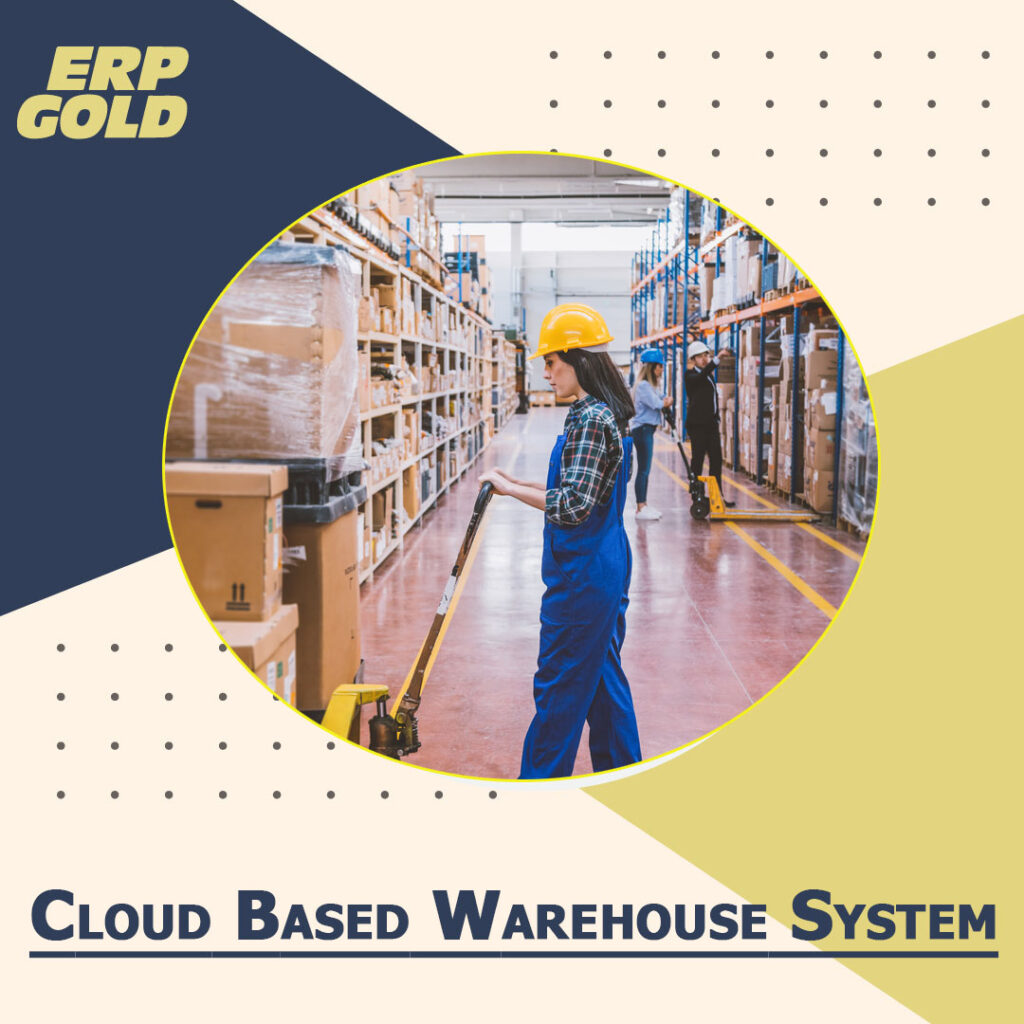
As the name implies, cloud-based WMS is software as a service warehouse management system. Accessible through any device with an internet connection, it is 100% web-based. No on-site hardware is required since the software is hosted on other servers, and there is no need to set up or maintain the infrastructure or servers.
How it helps any organization to improve warehouse performance

Products may be controlled more easily using cloud-based warehouse management software. we can identify its importance having analyzed below-mentioned functions that it performs.

  • Receipt to assure error-free operations,

The WMS works closely with the ERP system. It oversees the administration of the docking area and receives stock entry orders (advance shipping notices). WMS may also be set to produce labels that the operator inserts on the unit load when data on new stock arrives is input.

  • Storage.

Each unit load may be automatically located using a cloud-based warehouse management system. Stock turnover, manufacturing batch, expiry date, and so forth. Easy WMS from Interlake suggests product relocation based on sales figures and demand predictions.

  • Dispatches.

Shipment orders may be made using  WMS software. Easy WMS, for example, let you handle these orders by delivery method. It also manages the order consolidation and packing workstations.

To effectively manage consumer demand across distribution channels, a WMS is required. And WMS must have below mentioned features.

Features of ERP Cloud Based Warehouse Inventory Software


  •  Smooth ERP Platform Integration 

It speeds up the process and allows for accurate data tracking throughout the business when WMS data is connected with your ERP. In addition, it guarantees that all data is synced with other departments.

For example, salespeople unfamiliar with a warehouse management system cannot successfully inform consumers of orders. A WMS should be linked with an ERP platform like SAP Business One so that personnel and other departments are not left in the dark about the supply chain.

  • Mobile Deployment – Access from Anywhere

Employees go abroad, work remotely, and need fast access to warehouse, meeting, and conference data. Handheld devices can access an excellent warehouse management system. Manage on the go by tracking inventories and seeing purchase orders.

Enriching the ERP system by updating data instantaneously on a web-enabled or mobile WMS improves communication across departments. It allows for real-time inventory usage and visibility for all workers. Field employees may make reports electronically, record transactions, and handle daily responsibilities.

  • Cost-reduction Optimization of Resources

What inventory was purchased, when, and for what purpose? Does tracking and viewing resources (people, materials, and time) on the move seem difficult? This may lead to human mistakes and task postponement, negatively impacting corporate productivity.

When you use Many ERP, everything is done well and on schedule! It helps warehouse managers set labor requirements, plan and balance order volume, track outbound progress, expedite pick-pack-and-dispatch processes, and help plan and balance order volume.

Warehouse workers may handle electronic distribution, procurement, and other operations with a Cloud-based warehouse inventory software. Employees may collect, record, and access data from anywhere.

  • Inventory Flows Inbound and Outbound

Picking and packing products is a lengthy and confusing job that requires appropriate preparation and guidance. It shows the status of the warehouse for a purchase order, manufacturing order, delivery, or other products receipt. The company must keep track of all incoming items so that the appropriate departments can handle them.

You may use the Item Master-Detail screen to define batch, serial, and non-tracked products.

The incoming and outward (goods receipt) flow situation has been modified recently. A modern software system automates and drives all transactions. Intuitive Bin Management System (WMS) by Many ERP Your screen will automatically adapt to the device’s size and orientation.

  • A Paperless Inventory Transfer Process

Paper-based transactions are wasteful and inefficient. Warehouse transfers are simplified using the Many ERP WMS system like mostly use as ERP Gold are count to be as the best Cloud based warehouse inventory software and the need of the hour.

The warehouse transfer option may be used when Warehouse A needs a large range of items from Warehouse B. You may process it in a few minutes by mentioning the item code, batch number, bin code, on hand, and the transfer amount.

A confirmation message containing the Item’s reference number and transaction information will be sent after the transfer. The web-enabled and mobile-friendly program saves time and effort and supports real-time tracking of commodities by providing all necessary information.

WMSs are web-based and mobile applications that assure data integrity, facilitate corporate decision-making, and standardize routine warehouse operations. For example, it can print and record goods receipt POs, warehouse transfers, bin transfers, and item labels.

Conclusion

Cloud based warehouse inventory software allows the business to track and manage everything from a single place. With cloud-based warehousing software, it is easy for businesses to stay on top of inventories and resources.

read more
AdminWhat is Manufacturing accounting software ? Elaboration

How to choose ERP Software for Pharmaceutical Companies?

on April 13, 2022

ERP Software for Pharmaceutical Companies is in high demand as this industry is undergoing a massive transformation with the emergence of several new technologies and the need to further innovate in product quality, patient care and operational efficiency. The pharmaceutical industry has always been under pressure to invest in technologies that enhance product quality and patient care. These investments are projected to pick up steam in the coming months, fuelled by recent global events.

The COVID-19 epidemic, according to a new study, has advanced digital transformation in the pharmaceutical business by more than five years. Pharma companies have been investing substantially in different digital technologies, such as cloud computing and cyber security, as one of their main priorities.

Furthermore, many are exploring ERP Software for Pharmaceutical Companies as they look for methods to simplify procedures, increase efficiency, and comply with rigorous rules.

Today, we’ll look at the critical role of enterprise resource planning (ERP) in the pharmaceutical sector, including how we may utilize it, what it can accomplish, and what the future holds.

Importance of ERP for Pharmaceutical Companies

In the pharmaceutical business, there are severe regulations that must be adhered to by both big and small companies. Therefore, ERP and supply chain management systems are becoming more popular as a means of streamlining supply chain processes.

At every level of the production process, ERP sf may save you time and money. ERP software for pharma may help keep track of a variety of items, including raw materials, inventory, and packaging. Businesses may utilize these tools to get a better understanding of their operations while also enhancing their bottom line.

Because of the risk of human mistake, companies should avoid using out-of-date ERP systems or manual processes. Errors may put patients’ health at risk in certain situations. Because of this, we’ll need to improve how businesses operate.

For decades, operations were performed manually or via cumbersome software solutions that only monitored a workflow section.

As a result, team members faced several challenges, including

  • Lack of visibility into end-to-end business processes
  • Difficulty in tracking product batches across the supply chain
  • The inflexible and inefficient manufacturing process
  • Miscommunication throughout the supply chain and distribution channels.

Modern organizations are rapidly using technology to help them digitize and automate their operations.

ERP software for pharmaceutical companies, for example, can automate and improve every part of a pharmaceutical Company’s operations, including sales, quality assurance, batch manufacturing, inventory management, and back-office tasks (HR, accounting, etc.)

When an ERP platform is wholly embraced by the workforce and aligned with the organization’s strategic objectives, it may provide a slew of revolutionary advantages.

More efficient product management and tracking

  • Easier to control stock levels
  • Easier to monitor quality assurance levels
  • Easier to satisfy regulatory requirements
  • Easier to analyze and report data through ERP dashboards
  • Fewer human mistakes
  • Improved profitability
  • Improved customer service

10 Benefits of ERP Software for Pharmaceutical Companies

The advantages listed above are significant, but they might be applied to many companies, particularly the healthcare industry. Let’s take a deeper look at how ERP can make a significant impact in the pharmaceutical industry:

  • Formulation and Pre-Formulation are the first steps in the process.

The medication production process, understandably, is governed by tight restrictions. This contains instructions on how personnel should create and manage raw ingredients and how they should handle batch yields.

Employees must follow strict standards throughout the pre-formulation stage, which include:

  • defining drug manufacturing methods
  • scheduling drug production stages
  • measuring drug production amounts.

They may also be able to do so without continually checking output, resulting in higher productivity.

  • Costs of Drug Products

Several aspects go into determining the price of a prescription product. Companies must assess the costs of

  • Purchasing materials
  • Managing raw materials, among other things.
  • Supply chain management

These expenditures are separately documented in distinct departments without a centralized ERP platform. As a result, if this data is altered or updated, the new values may take some time to sync. As a consequence, calculating ultimate product costs is inherently difficult.

With an ERP system, on the other hand, every authorised employees gets rapid, centralised access to the same data. This allows your finance staff to easily monitor cost elements across departments.

Three of the most significant issues to consider are inventory management, scalability, and flexibility.

Pharmaceutical companies have always needed to keep track of their inventories. This worry has been heightened by the present pandemic.

ERP allows businesses to track and manage commodities in real time. Serialization may also help with inventory management, reducing time-consuming bottlenecks and potentially catastrophic stock-outs. Most systems also include traceability capabilities, which enable companies to quickly recall products if required.

  • Consider factors other than numbers.

An ERP system, as the name suggests, incorporates all aspects of your organization, not simply accounting and money. Accounting and invoicing, customer relationship management, inventory management, distribution management, and human resource management systems will all be linked into one single platform in a powerful ERP solution. Data is exchanged across all systems, resulting in useful cross-functional reporting.

  • Enhanced Data Protection

ERP software for pharmaceutical companies provides significantly better data security than spreadsheets or entry-level accounting software. In terms of data security, both on-premise and cloud-hosted ERPs are equal. Furthermore, cloud-based ERPs are equipped with several sophisticated data security capabilities like as ransomware protection, data encryption, virus protection, and intrusion prevention.

  • Enhance Customer Service

Whether you operate a B2B or B2C pharmaceutical Company, improving your customer experience and service is critical to increasing revenue, and ERP may assist in various ways. Your sales staff can manage, analyze, and modify client data with a contemporary ERP that includes a CRM to figure out your customers’ demographics, trends, and wants.

  • Adherence to the law

Legislation and criteria are constantly evolving in all businesses, especially in the industrial and food & beverage industries. Failure to comply with them may be quite costly to your pharmaceutical Company. Aside from GAAP and IFRS compliance, sophisticated systems like Acumatica and Sage Intacct also help with paperwork, training, accuracy, reporting, security, and process management – all of which are critical components of complying with laws.

  • Enhance Productivity

One of the key advantages of ERP is how simple it is to use. An ERP can help you optimize your pharmaceutical Company operations and automate data processing the most efficiently and effectively possible. ERP software reduces paperwork and the risk of human mistakes, which may interfere with productivity. Many manual processes may be automated, giving workers more free time and enabling them to focus on more productive duties. Your employees will be able to complete their tasks more quickly and efficiently.

  • Use the cloud to access data from any location.

ERP systems may be deployed as a web or mobile application using cloud technologies, depending on your requirements. You may access your data from any computer or mobile device with an internet connection.

This gives your pharmaceutical Company more flexibility and mobility, particularly if you have team members that work in various towns, remotely, or in the field. You can make data-driven choices fast and stay ahead of the competition if you have up-to-date, accurate information at your fingertips.

  • Insightful Reports and Dashboards

One of the essential advantages of ERP Software for Pharmaceutical Companies is its better understanding. Having all of your data in one place allows you to evaluate your pharmaceutical Company processes and determine what makes sense and what may be improved.

You may eliminate inefficient procedures and understand the many ways you can boost efficiency and build a better cash flow with the aid of valuable reports and analytics.

ERP suppliers also provide business intelligence (BI) solutions, which enable companies to obtain better knowledge and analytical insight into their operations. You’ll be able to make better business decisions based on accurate and timely data.

  • Adaptable and Scalable to Your Pharmacy.

ERP Software for Pharmaceutical Companies have scalability and adaptability to your business’s size and changing nature is one of its most significant advantages. Many small firms are hesitant to even explore an ERP because they believe only expensive one-size-fits-all options are available.

Best-of-Breed and Best-in-Class ERP systems enable organizations to create a tech stack tailored to their specific requirements, resulting in a unique solution. Customizing and integrating certain capabilities is critical to ensuring efficient business operations.

This means you only pay for the modules, add-ons, and connectors that directly benefit your organization, rather than an all-in-one solution with numerous capabilities and systems you don’t require.

Aspects to Consider while Selecting an ERP software for pharmaceutical companies :

  • Material and Inventory Management Done Right

Material waste at different levels of inventory has a detrimental influence on a firm’s profitability. We may control material waste, and we can monitor inventory levels with the aid of ERP Software for Pharmaceutical Companies. It assists in determining the material needed for production, establishing objectives, setting procurement and replenishment targets, and displaying material management, all of which aid in inventory level optimization and, as a result, minimize waste to some degree.

  • Management of Documents

It’s critical in this highly regulated business to keep track of all data and paperwork for future analysis and audit inspections. The ERP system aids in the organization of data that is now maintained in silos to fulfill compliance and regulatory vigilance requirements.

  • Management of the Formulation

The drug formula is valuable to pharma manufacturing SMEs, but it may be devastating if it is stolen, misused, or lost. The Pharma ERP solution enables manufacturers to document formula management, including the list of ingredients used, how we used them, tracking ingredient details, and storing and securing formulas with approval workflow. Restricted access is also made available.

  • Processing in Batches

According to cGMP criteria, WE must make the medications in batches rather than in a disorderly manner. ERP that can readily distinguish and manage the various forms of medication manufacture in batches is quite beneficial. Printing BMR and MBR as well as SOPs are just some of the features that the Pharma ERP for SMEs offers.

  • Traceability of lots

If anything goes wrong in the traditional sense, it’s difficult for producers to pinpoint the source of the issue and then take the appropriate steps, which slows down production. The lot traceability function in ERP gives manufacturers a 360-degree view of medicine production from procurement through distribution and sales, allowing them to conveniently handle recall situations and issue product recalls quickly if necessary.

  • A Game-Changer in the Industry

It’s no wonder that the pharmaceutical sector is paying attention as technology changes how we conduct business. Strict laws, complicated procedures, and a demanding clientele characterize this industry.

As ERP’s importance in the pharmaceutical sector grows, influential business executives will be ready to embrace these new technologies and execute the required business process reengineering to match their operations with the latest technology.

Our ERP consulting team can guide you through the following phases starting with essential planning and ERP software selection.

The Importance of ERP in Post-Corona virus Manufacturing

According to the World Bank, the COVID-19 epidemic has impacted businesses worldwide, with global GDP likely to decrease by 5.2 percent in 2020. The World Bank describes this as “the biggest global recession in decades” in its Global Economic Prospects report released in June 2020.

Tourism, fashion, and banking, as well as Manufacturing, have been particularly susceptible. Shipping delays have hampered the supply of resources and raw materials. Safety regulations have prohibited manufacturing facilities from working at total capacity, canceling regular and big orders. Consequently, there are shortages of everything from medications to food to clothes.

Given COVID-19’s tremendous influence on the manufacturing industry, it’s no wonder that stakeholders are developing long-term strategies and plans for rebuilding the initiative and laying a foundation that will provide much-needed stability.

Enterprise resource planning, or ERP, combines important pharmaceutical Company activities and operations into a centralized system worth examining in this respect. Cost savings, better efficiency and production, decreased risk and human error, and rapid growth are just a few of the advantages of ERP.

ERP serves as the basis for post-coronavirus production in various ways, and these are significant areas where a cloud ERP system or cloud CRM solution may help.

read more
AdminWhat is Manufacturing accounting software ? Elaboration

Why You Choose RFID Based Inventory Tracking System!!!

on April 13, 2022

What Is RFID?

Radio-frequency identification (RFID) refers to a technique that gathers digital data from RFID tags or smart labels (described below). Similar to bar-coding, data from a tag or label is recorded by a device and kept in a database. RFID, on the other hand, provides significant benefits over barcode asset tracking. The most notable distinction is that RFID tags may be read without a scanner, while barcodes need alignment.

How does RFID work?

RFID falls under the category of Automatic Identification and Data Capture technology (AIDC). With minimum human intervention, automated item identification and data collecting technologies enter data straight into computer systems. This is accomplished by the use of radio waves.

An RFID tag or smart label, an RFID reader, and an antenna are the three components of an RFID system. An integrated circuit and an antenna transmit data to the RFID reader (also called an interrogator). The reader then turns the radio waves into data. A communications link then transfers the data gathered from the tags to a host computer system, where it may be saved in a database and subsequently examined.

What Is RFID Based Inventory Tracking System?

RFID stock control

An RFID tag is a small microchip with a small antenna that contains digital data about an object. Tags are attached to products, packaging, pallets, containers, and even vans or delivery trucks.

An RFID reader interrogates the tag by sending and receiving radio signals. The reader’s data is compiled and processed by specific computer software. A factory or warehouse may utilize readers to display when things are moved.

RFID Based Inventory Tracking System has various benefits over traditional technologies like barcodes:

  • Certain tags may be replaced, enabling information about things to be modified, such as when they are transferred from one portion of a factory to another
  • For quality control, especially if you create or store perishable goods

The costs of RFID tagging have reduced and continue to decline. The advantages of better stock management and security appeal to retailers, wholesalers, and distributors that sell many things and manufacturers who create products in bulk for several consumers.

Advantages of RFID in Inventory Management

The main advantage of RFID Based Inventory Tracking System is its automation and inexpensive labor. A warehouse management system or another equivalent system that collects and stores data automatically removes many of the limits and concerns associated with utilizing labels or barcodes for tracking. RFID tags also provide the following advantages in inventory management:

  • Labor expenses are lower: When scanned by an AIDC system, the tags generate and report data, reducing labor costs.
  • No need for line-of-sight. Like barcodes, RFID tags function without line-of-sight. In other words, employees don’t have to flip boxes to align, apply, or repair barcodes.
  • Boosts visibilityBetter supply chain visibility comes from processing and capturing more data.
  • More InformationMore data helps monitor items and keep customers, retailers, and supply chain partners informed.

Scans More Objects, Faster Handheld barcode scanners can’t process and classify information as rapidly as RFID tags!

  • Prevents damage: RFID tags that are less prone to damage during packing, shipping, and receiving are less likely to be destroyedsince they are made of plastic or hard shells.
  • Reduces over-and under stocking. RFID tags may also increase security and prevent inventory concerns since everything is recorded.

Using RFID Based Inventory Tracking System for Military Inventory Monitoring Has Flaws

The adversary can monitor RFID tags, enabling terrorists and other unscrupulous actors to find troops or assets at distances considerably greater than manufacturers promise.

Researchers from the AP showed that an RFID tag within a weapon may be detected from far more than the few dozen feet reported by manufacturers and contractors who install RFID systems. Signal broadcasts are restricted by the US government during field testing. The opponent, however, has no such limitations, and the testing specialists think the tags may be traced from kilometers away.

One expert speculated that an RFID Based Inventory Tracking System tag on the International Space Station (ISS) exterior might be monitored with a powerful reader. The ISS is 250 kilometers away, and RFID tags can be monitored using a few simple types of equipment that fit within a backpack.

RFID Based Inventory Tracking System Technology replacing outdated software reason is given below

RFID is replacing the old times inventory software because these software have many flaws and thus they cannot meet the need of the supplier and RFID had come and wipe out these gaps. Some of the gaps are discussed below are

These old-school approaches cause numerous current issues, which worsen as the inventory grows and the ways listed above cease functioning.

Lack of correct data entry.

  • High staff training costs: Training might take weeks or months, depending on your inventory. Invalidated methods of asset monitoring may lead to mistakes and revenue loss.
  • No central customer database:Inventory managers may struggle to receive current inventory information due to the absence of a single database.
  • Insecurity: we all know how insecure data printed on paper and spreadsheets is. To produce copies, just use a phone camera or a thumb drive.
  • Slows down the operation: manually entering data takes significantly longer than updating the database automatically.

This strategy will cost you money due to errors, typos, duplication, and delayed processes.

Large inventory cannot be tracked or managed using paper or spreadsheets. Along with RFID Based Inventory Tracking System, barcode scanners are utilized for real-time asset tracking.

Conclusion

This is a complete inventory management system, and you can use this for your small retail stores. The main feature of this system is that it is RFID-based, so it helps you to track your inventories easily.

read more
AdminWhat is Manufacturing accounting software ? Elaboration

Chemical Labeling For Inventory Tracking and its Features

on April 13, 2022


What Is Chemical Labeling for inventory tracking?

A chemical labeling method for inventory monitoring uses various barcode labeling procedures to designate chemical items. These labels help to identify and trace chemical products.

Accountability is critical at all levels of chemical inventory management. Bar-coding is a dependable approach to monitoring and reporting substances. Custom Packaging Division offers chemical barcoding services to assure industrial compliance.

How to Do Chemical Labeling for Inventory Tracking? Guidelines

Inventories management differs from asset management due to the rapid turnover of inventory. Your inventory products may be consumed by manufacturing orders or relocated to fulfil client orders, replace components, or replenish supplies. For many businesses, this means a flexible system that accounts for shelf and rack space. The steps below are suggested to start an inventory labelling effort.

Confirm label needs. It is important to understand any local, regulatory, or equipment-based constraints that may affect the label’s structure and content. This includes barcode type, label size, and label material.

Get premium labels. Whether you print your labels in-house or employ a reliable source, you should verify that the quality fulfils your application requirements. Examine the labels’ suitability for the environment in which your items will be used. It is usually ideal to use label materials and coatings that can resist tough environments.

Label stock consistently. Once you have your labels, establish a basic protocol for how and where they should be put on the inventory. When put on a shelf or rack, each label should be clearly readable.

You should also make the label barcode readily available to any scanners. Last but not least, ensure that rack and shelf location names match your chemical labeling for inventory tracking  and relevant to the correct tracking procedures. It’s easier to see errors and process individual goods when you have a common label placement technique.

Examine your inventory methods. The top warehouses will likely be always looking for ways to increase performance and reduce expenses. Review your internal and external processes on a regular basis to find difficulties and areas that need improvement. Once your inventory management process is well-oiled and you have enough inventory labels in place, you will be able to reap the system’s rewards.

  • Essential Features of Chemical Labeling Software for Inventory Tracking

Wi-Fi Barcode Scanner

Wireless barcode scanning is critical for inventory tracking. Whether receiving fresh chemicals or shipping finished goods, barcode scanning guarantees you know where your chemicals are and how much you have. Management or personnel may scan substances from anywhere using mobile barcode scanners.

MRP/Forecasting

Chemical inventory software systems provide material resource planning and forecasting for chemical labeling for inventory tracking process. This tool predicts future material/chemical inventory needs based on previous sales data, season ability, and current inventory. This application may also be used to create buy orders and reorder points, greatly optimizing corporate processes.

With such a strong tool, you’ll never buy too much or too little merchandise again! This feature saves an organisation money since it eliminates the danger of excess inventory and eliminates the requirement for extra storage space.

Unit Conversion Auto

Aside from being amusing and frustrating, automated unit conversion is an important aspect of chemical inventory solutions. Automatic conversion saves staff time and eliminates human mistake. This reduces expenses by reducing the amount of inaccurate computations.

Online Inventories

Chemical inventory software systems can offer an up-to-date overview of your chemical labeling for inventory tracking and allow you to search for specific compounds. Buying, storing, using, and disposing of chemicals will change inventory counts in real-time. Other pertinent information may help with inventory search results, such as CAS registration numbers, barcodes, or chemical locations. Employees must guarantee that real-time inventory control is routinely updated for it to be effective.

Quick Data Integrity Checks

Again, chemical labeling for inventory tracking solutions are vital for manufacturing or lab safety. For example, if the incorrect product or chemical is scanned during manufacturing, you will be notified automatically. These technologies may also assist OSHA and other regulatory organizations gather data and records to assure compliance.

Thousands of assets and inventory items must be monitored and maintained in a factory, warehouse, or shop floor.

Conclusion

Labels are an essential part of the packaging process. A label is two-fold: to inform consumers of the product details, ingredients, and manufacturing information and then identify the package contents. 

Why don’t they put a proper labeling system so that they might not get involved under the upper sections? Using proper chemical labeling for inventory tracking system allows you to get the best grip, safety, and security for yourself, your staff, your customer, and your wallet because this system will prevent you from heavy fines? Hence, let’s start searching today and apply these applications if you haven’t done yet. Good luck.


read more
AdminWhat is Manufacturing accounting software ? Elaboration

Multi-Channel Listing Software for Small Business

on April 08, 2022

What is Multi-Channel Listing Software for Small Business? Define

Multichannel commerce is the secret ingredient to running a successful e-commerce business in a world that is constantly searching for ease.

As we’ve seen, succeeding in multichannel commerce may provide a variety of problems. Many of these difficulties are caused by similar flaws and may be resolved with multichannel listing software. So, in your search for the finest multichannel listing software, you may have discovered that there is a plethora of options available.

What makes a multichannel listing software For small business “good”? 

When searching through Multi-Channel Listing Software for Small Business, you should think about the characteristics that will make or break it.

At the very least, your tool should be able to control the following:

  1. The ability to track inventory so that you don’t run out of channels.
  2. When available, The capacity to reduce time when bringing products to market across several platforms.
  3. Capability to distribute consistent product information across all sales channels
  4. The capacity to reduce time when bringing products to market across several platforms.
  5. Real-time inventory visibility across different channels for quicker and more effective product management

Now, let’s look at the best solutions for small to medium-sized businesses (SMBs).

What are the functions of multi-channel listing software for small business?

What Does Multichannel Ecommerce Software Do?

You save time, money, and worry by using multi-channel listing software for small business. It allows you to work more efficiently across several channels (i.e., you won’t have to log into each channel separately for the same duties). It saves you the time and effort of recreating your job for each channel and manually reconciling inventory or sales statistics.

It is important to note that a multichannel system is not the same as an ERP. While both allow you to consolidate your operations, a multichannel system is built primarily for ecommerce and customer-facing sites. It is more agile, quicker to install, and more in tune with how ecommerce channels operate.

You may also select from a variety of solutions. Some just provide tools for a certain aspect of multichannel selling, such as inventory, listing, and/or order administration. Others provide a mix of these. The finest ones understand that in order for one component of your operations to perform successfully, it must work in tandem with everything else, and will thus offer integrations that keep all of your programmers linked.

  • Centralization

Is the system integrated with your primary sales channels? Keep in mind that certain platforms will not connect with every channel you sell on, so you must consider whether a channel is critical to your success. You’ll also want to see whether the platform can interact with overseas markets (if that’s a priority for you) and/or if it integrates with your WMS, OMS, or other critical apps.

  • Automation of Listings

One of the most significant advantages of multichannel software is the ability to avoid manually listing your items on each channel. Keep a watch out for software (particularly inexpensive software) that claims to automate listing but still requires a lot of human setup. Each channel has extremely precise listing requirements and a distinct taxonomy that vary on a regular basis, thus your platform must be able to adapt to their criteria both now and in the future.

  • Management of Change

Markets are always changing. Amazon, for example, adjusts its listing criteria on a regular basis to provide a better user experience for its consumers. This drives sellers to accept changes fast, even if it means pausing regular operations and manually changing their ASINs for weeks, in order to avoid severe fines. Your software provider should be used to dealing with such adjustments. Most service providers need weeks (if not months) to build new solutions (which usually still require manual work on your end). However, if they are anything like Zentail, they will have an automated system in place to deploy solutions faster and reduce the amount of labor on your plate.

  • Adheres to accounting standards and regulatory regulations.

Regardless of sector, rules and regulations generate problems for all businesses. Revenue recognition law changes have increased corporations’ need to recognize revenue consistently. Something that earlier on-premises systems were not designed to manage.

Now, ERP enables organizations to align with the regulatory landscape. Change is unavoidable; arm your company with the tools it needs to keep up with the unpredictability of the global economy.

  • Provides a consistent and accurate view of the business  to all organization

During a business’ initial growth, they often purchase software as a specific need arises. This creates silos of data and information across the company’s functions. With disparate systems, costly integrations are needed to access critical information easily. Add this to the internal battles over whose data set is more accurate and the decision-making process is significantly impeded.

Cloud ERP solutions provide accurate, real-time data that helps teams collaborate more effectively. Using real-time inventory data, sales and marketing can develop promotions for products that are actually in stock, leading to increased revenue and happier customers.

  • Promotes rapid response speeds

Companies that use heterogeneous systems rely on IT support to gather and create reports. Data collecting delays cause the information to be out of date by the time it reaches decision-makers.

for that, Many ERP vendors provide role-based dashboards, which provide employees with instant access to real-time data. Decisions are made more quickly, easily, and accurately.

  • Lowers operational risk

Cloud ERP integrates approval procedures into procurement, accounts payable, and other financial activities. This is supported with access control features based on user responsibilities, which ensures that data is accurate and in the hands of the right individuals.

  • Tracks unit economics, customer and project profitability

Unit economics helps firms assess the profitability potential of product lines and change appropriately by reviewing direct revenues and expenditures on a per-unit basis on a regular basis. Manufacturers struggle to effectively answer these questions and establish how many resources are dedicated to product X vs product Y without integrated systems—visible gaps that might harm profitability.

Companies that use cloud ERP have the visibility they need to identify whether goods have positive vs negative margins and can make company development and profitability estimates.

  • Helps companies scale and adapt

Companies that rely on spreadsheets or rudimentary accounting systems at first tend to outgrow them as they increase and add complexity. When these businesses build new sites, create subsidiaries, and/or begin dealing in other currencies, the demand for a more powerful enterprise system grows tremendously.

While smaller businesses may get by with rudimentary systems and spreadsheets, organizations who use cloud ERP not only enhance their present company management procedures, but they are also well positioned to scale up in the future.

Inventory synchronization

Your application should protect you against early stock outs or overselling by dynamically updating available amounts as sales are made. This means that if you make a sale on one channel, your other channels should be updated fairly immediately. Concurrent selling is also aided by inventory buffers. They ensure that when you’re down to your last few things, your item is only available for purchase through one channel. All other channels will be turned off to avoid overselling.

Automation of Workflow

What activities use the most of your time? What would you prefer to do with your free time? What is blocking your business from expanding? Your passport to better success should be multichannel ecommerce software. Workflow automation may encompass a wide variety of operations, but some of the most typical include the capacity to plan and automate promotions, make mass changes to a large library, and address listing difficulties quickly.

The User Interface (UI)

How many clicks do you need to do fundamental platform functions? Is the platform easy to use, or will you have to spend a lot of time training new team members? Cute Phrases According to Elon Musk “Error equals all user input.” You’ll want to ensure that your platform takes as few user activities as feasible.

Support

One of the most underappreciated needs of a strong software partner. Customer service, on the other hand, should never be an afterthought; each year, many vendors abandon their platforms due to bad assistance. Check to determine if your software provider’s support team is easily accessible. Is there a direct connection to their customer service team? Or are they attempting to conceal that information?

Key Features

Keep an eye out for these essential qualities as you search for a solution that fulfils your requirements. Some may take precedence over others; make a list ahead of time so that you can thoroughly examine your alternatives.

Ending:

ERP Gold with Cloud Interphase is a contemporary business solution that offers flexibility, real-time visibility, a wide range of functionality for diverse distributor micro-verticals, and easy connection with numerous market-leading apps. Download the ERP Gold trial to understand more about what ERP Gold Distribution Edition can give you especially, and we also have a mobile application that is easily available on Google Play. Have fun surfing.


read more
AdminWhat is Manufacturing accounting software ? Elaboration