Multi-Channel Listing Software for Small Business

on April 08, 2022

What is Multi-Channel Listing Software for Small Business? Define

Multichannel commerce is the secret ingredient to running a successful e-commerce business in a world that is constantly searching for ease.

As we’ve seen, succeeding in multichannel commerce may provide a variety of problems. Many of these difficulties are caused by similar flaws and may be resolved with multichannel listing software. So, in your search for the finest multichannel listing software, you may have discovered that there is a plethora of options available.

What makes a multichannel listing software For small business “good”? 

When searching through Multi-Channel Listing Software for Small Business, you should think about the characteristics that will make or break it.

At the very least, your tool should be able to control the following:

  1. The ability to track inventory so that you don’t run out of channels.
  2. When available, The capacity to reduce time when bringing products to market across several platforms.
  3. Capability to distribute consistent product information across all sales channels
  4. The capacity to reduce time when bringing products to market across several platforms.
  5. Real-time inventory visibility across different channels for quicker and more effective product management

Now, let’s look at the best solutions for small to medium-sized businesses (SMBs).

What are the functions of multi-channel listing software for small business?

What Does Multichannel Ecommerce Software Do?

You save time, money, and worry by using multi-channel listing software for small business. It allows you to work more efficiently across several channels (i.e., you won’t have to log into each channel separately for the same duties). It saves you the time and effort of recreating your job for each channel and manually reconciling inventory or sales statistics.

It is important to note that a multichannel system is not the same as an ERP. While both allow you to consolidate your operations, a multichannel system is built primarily for ecommerce and customer-facing sites. It is more agile, quicker to install, and more in tune with how ecommerce channels operate.

You may also select from a variety of solutions. Some just provide tools for a certain aspect of multichannel selling, such as inventory, listing, and/or order administration. Others provide a mix of these. The finest ones understand that in order for one component of your operations to perform successfully, it must work in tandem with everything else, and will thus offer integrations that keep all of your programmers linked.

  • Centralization

Is the system integrated with your primary sales channels? Keep in mind that certain platforms will not connect with every channel you sell on, so you must consider whether a channel is critical to your success. You’ll also want to see whether the platform can interact with overseas markets (if that’s a priority for you) and/or if it integrates with your WMS, OMS, or other critical apps.

  • Automation of Listings

One of the most significant advantages of multichannel software is the ability to avoid manually listing your items on each channel. Keep a watch out for software (particularly inexpensive software) that claims to automate listing but still requires a lot of human setup. Each channel has extremely precise listing requirements and a distinct taxonomy that vary on a regular basis, thus your platform must be able to adapt to their criteria both now and in the future.

  • Management of Change

Markets are always changing. Amazon, for example, adjusts its listing criteria on a regular basis to provide a better user experience for its consumers. This drives sellers to accept changes fast, even if it means pausing regular operations and manually changing their ASINs for weeks, in order to avoid severe fines. Your software provider should be used to dealing with such adjustments. Most service providers need weeks (if not months) to build new solutions (which usually still require manual work on your end). However, if they are anything like Zentail, they will have an automated system in place to deploy solutions faster and reduce the amount of labor on your plate.

  • Adheres to accounting standards and regulatory regulations.

Regardless of sector, rules and regulations generate problems for all businesses. Revenue recognition law changes have increased corporations’ need to recognize revenue consistently. Something that earlier on-premises systems were not designed to manage.

Now, ERP enables organizations to align with the regulatory landscape. Change is unavoidable; arm your company with the tools it needs to keep up with the unpredictability of the global economy.

  • Provides a consistent and accurate view of the business  to all organization

During a business’ initial growth, they often purchase software as a specific need arises. This creates silos of data and information across the company’s functions. With disparate systems, costly integrations are needed to access critical information easily. Add this to the internal battles over whose data set is more accurate and the decision-making process is significantly impeded.

Cloud ERP solutions provide accurate, real-time data that helps teams collaborate more effectively. Using real-time inventory data, sales and marketing can develop promotions for products that are actually in stock, leading to increased revenue and happier customers.

  • Promotes rapid response speeds

Companies that use heterogeneous systems rely on IT support to gather and create reports. Data collecting delays cause the information to be out of date by the time it reaches decision-makers.

for that, Many ERP vendors provide role-based dashboards, which provide employees with instant access to real-time data. Decisions are made more quickly, easily, and accurately.

  • Lowers operational risk

Cloud ERP integrates approval procedures into procurement, accounts payable, and other financial activities. This is supported with access control features based on user responsibilities, which ensures that data is accurate and in the hands of the right individuals.

  • Tracks unit economics, customer and project profitability

Unit economics helps firms assess the profitability potential of product lines and change appropriately by reviewing direct revenues and expenditures on a per-unit basis on a regular basis. Manufacturers struggle to effectively answer these questions and establish how many resources are dedicated to product X vs product Y without integrated systems—visible gaps that might harm profitability.

Companies that use cloud ERP have the visibility they need to identify whether goods have positive vs negative margins and can make company development and profitability estimates.

  • Helps companies scale and adapt

Companies that rely on spreadsheets or rudimentary accounting systems at first tend to outgrow them as they increase and add complexity. When these businesses build new sites, create subsidiaries, and/or begin dealing in other currencies, the demand for a more powerful enterprise system grows tremendously.

While smaller businesses may get by with rudimentary systems and spreadsheets, organizations who use cloud ERP not only enhance their present company management procedures, but they are also well positioned to scale up in the future.

Inventory synchronization

Your application should protect you against early stock outs or overselling by dynamically updating available amounts as sales are made. This means that if you make a sale on one channel, your other channels should be updated fairly immediately. Concurrent selling is also aided by inventory buffers. They ensure that when you’re down to your last few things, your item is only available for purchase through one channel. All other channels will be turned off to avoid overselling.

Automation of Workflow

What activities use the most of your time? What would you prefer to do with your free time? What is blocking your business from expanding? Your passport to better success should be multichannel ecommerce software. Workflow automation may encompass a wide variety of operations, but some of the most typical include the capacity to plan and automate promotions, make mass changes to a large library, and address listing difficulties quickly.

The User Interface (UI)

How many clicks do you need to do fundamental platform functions? Is the platform easy to use, or will you have to spend a lot of time training new team members? Cute Phrases According to Elon Musk “Error equals all user input.” You’ll want to ensure that your platform takes as few user activities as feasible.

Support

One of the most underappreciated needs of a strong software partner. Customer service, on the other hand, should never be an afterthought; each year, many vendors abandon their platforms due to bad assistance. Check to determine if your software provider’s support team is easily accessible. Is there a direct connection to their customer service team? Or are they attempting to conceal that information?

Key Features

Keep an eye out for these essential qualities as you search for a solution that fulfils your requirements. Some may take precedence over others; make a list ahead of time so that you can thoroughly examine your alternatives.

Ending:

ERP Gold with Cloud Interphase is a contemporary business solution that offers flexibility, real-time visibility, a wide range of functionality for diverse distributor micro-verticals, and easy connection with numerous market-leading apps. Download the ERP Gold trial to understand more about what ERP Gold Distribution Edition can give you especially, and we also have a mobile application that is easily available on Google Play. Have fun surfing.

 

read more
AdminWhat is Manufacturing accounting software ? Elaboration

Manufacturing Stock Management Software and Its Functions

on April 08, 2022


What is manufacturing stock management Software?

Manufacturing Stock management software is used to track completed items and raw resources. It is an application that lets you manage your inventories, their location, and status.

Stock management software automates operations such as tracking manufacturing inventories, managing reorders, and updating accounting data.Infact, this software will allow you to know what is occurring with your stock at any moment

Industrial Manufacturing stock management Software’s reliability, effectiveness, and features are critical to everyday corporate operations.

Key Function of Manufacturing Stock Management Software

Getting manufacturing stock management properly may help you keep costs down by managing your supply chain effectively.

Manufacturing stock management Software is a computer-based system that automates all manufacturing stock management operations. It will help you keep track of orders, manufacturing stock management levels, sales, and delivery at the point of purchase, streamlining your manufacturing stock management.

  • Manufacturing stock management Control Made Easy

A Manufacturing stock management Software streamlines the process of controlling manufacturing stock management, saving time and money. It streamlines company operations and helps you make better choices.

  • High-efficiency Workforce

A stock management Software increases productivity and efficiency by automating everyday manual operations, allowing your firm to develop faster. The program will enable you to print shipping labels, manage inventories, handle and dispatch orders, and create and update listings all from one dashboard.

  • Boost Profits

The program also leverages marketing and manufacturing to maximize profits and return on investment. Businesses may cut costs and increase profits with the capacity to automate critical company procedures, such as controlling stock levels, updating listings across all selling channels, and processing orders.

  • Avoid stockouts and overstock

There is multi-level stock management. Managing and maintaining manufacturing stock management balance may be difficult. A stock out may upset consumers and result in a loss, while excess goods take up warehouse space. In any case, it is business expenditure. Manufacturing stock management Software monitors stock levels and automatically reorders products.

  • Quality Control

This program discovers and analyses problems such as late shipments, damaged goods, etc., and gives insights to help improve quality.

  • Supply-Demand Balance

A good stock management Software will meet customer expectations on time and on budget.

  • Prognosis and planning

The stock management Software will help you determine the possibility of creating additional regional warehouses near important customers to boost efficiency and service levels.

  • Manufacturing stock management Reports

The program will create reports for you. You will get reports on low-stock, perpetual manufacturing stock management validation, and manufacturing stock management prediction.

  • A one-stop-shop

Order management, listing management, and shipment management are vital features of a reputable Manufacturing stock management Software that can help streamline the whole selling process.

  • Serial-number tracking

It also tracks serial numbers. The program controls an unlimited number of serial numbers from receipt to issuance, and the data is saved in the system for future reference.

Advantages of Manufacturing Stock Management Software

Effective warehousing and stock management software helps warehouses organize and simplify activities. Having stock in the correct location at the right time may dramatically minimize delivery costs.

  • Overall Cost Savings

Less mistakes equal less resources spent repairing them. Fewer mistakes mean less damage control.

Organizing your stock saves you money on unneeded storage. As a result, stock managers may relax knowing that the key goods are scheduled to renew automatically. This allows for more product diversity and reduces stock costs.

Automation saves time, which saves money. You need fewer humans to choose, pack, and prepare shipments when you employ AI and robots.

  • Affordability of Stock

Many merchants’ stock is just 63 percent correct. Given the potential consequences of an incorrect order, this figure seems modest. Manufacturing stock management Software minimizes stock requirements while enhancing order accuracy.

Companies may save a lot of money and time by reducing retained stock. Companies that adopt a sophisticated Stock management system may shut one or more warehouses and save money.

Just-in-time stock is a notion that complements stock monitoring software. This stock method enables a corporation to continuously monitor stock levels and only maintain what is required in the near term on hand.

Companies may use stock management software to be nimble and handle inventories better. Using some of these tactics may increase your system’s ROI.

  • Prevent Over or Under Stocking

Every day, stock managers must deal with maintaining stock levels. Unchecked stock levels may lead to either too much or too little stock. In either case, not ordering enough of a popular item may lead to stockouts, lost sales, and unhappy consumers. Too much merchandise makes moving difficult and takes up precious warehouse space.

Much Manufacturing stock management Software utilizes algorithms to compute reorder points for different commodities to keep consumers happy and maximize warehouse space.

  • Better customer

Happy customers mean positive ratings and repeat business. You’ll also gain industry trust and reputation. An stock management system’s features are all geared to help you wow your clients.

  • Automation Saves Time

Stock management systems save time and money. No need to manually enter product or box numbers using barcode scanning and other agile stock handling tools. The system allows workers or robotic pickers to scan more items every shift.

  • Managing Multiple Locations

Larger companies are early users of Manufacturing stock management Software and other stock resource planning tools, such as accounting software, since this strategy scales effectively. Businesses can easily monitor stock across numerous warehouse sites using real-time stock data.

Conclusion

Most of the software-making companies are helping manufacturers and companies to improve the way they do business. We develop software that will take your company through an evolutionary leap. We have a different approach to building software; we believe in working closely with our clients and build custom solutions instead of off-the-shelf packages.

read more
AdminWhat is Manufacturing accounting software ? Elaboration

Barcode Software for Warehouse and Its Advantages for . . .

on April 07, 2022


What Is Barcode Software for Warehouse?

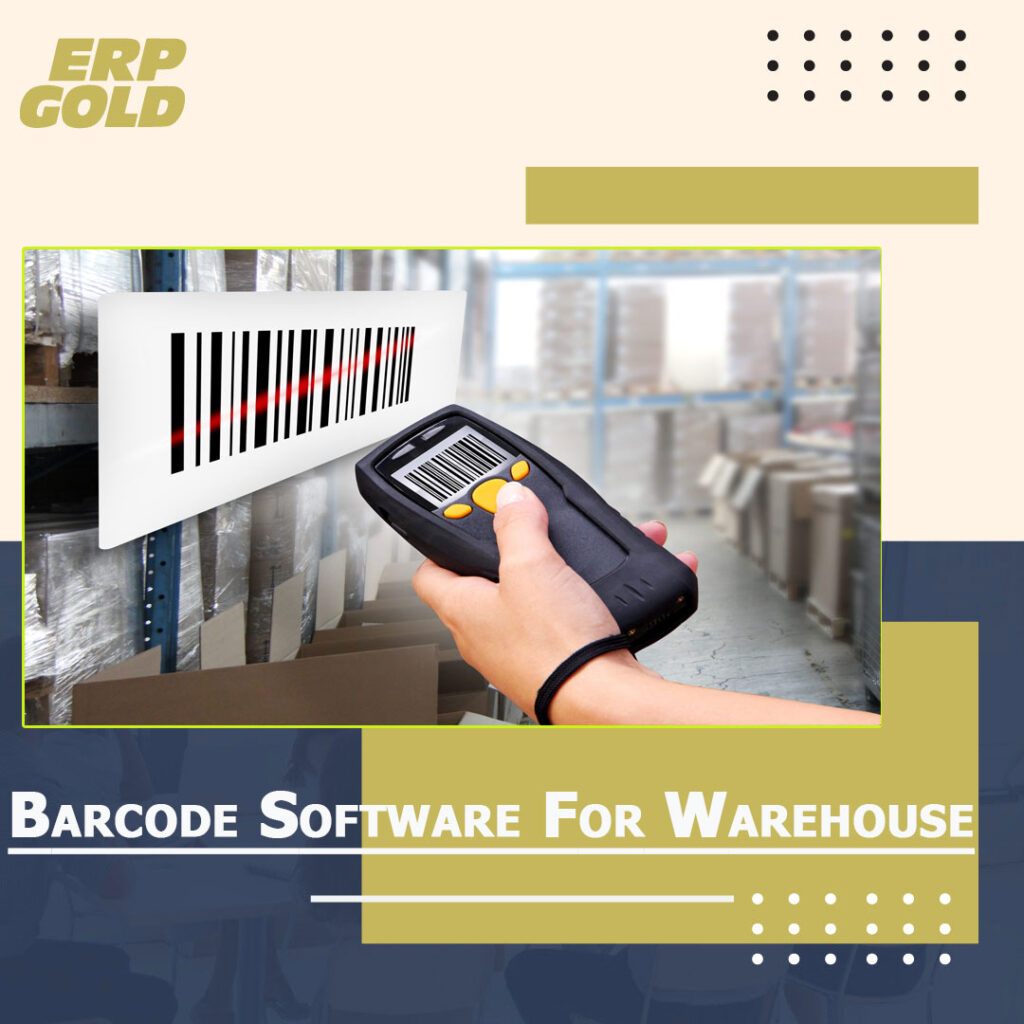
Barcode software for warehouse creates machine-readable code from integers and parallel lines of varying lengths. This equipment can print the barcode on items. Integrated scanners can scan and read barcodes. These tools provide templates for users to print their barcodes in. Various sectors and governments utilise these various templates to print barcodes.

Benefits of Barcode Software for Warehouse 

Barcode software for warehouse are affordable. In the early days of barcode scanning in warehouse management, this was not always the case. No firm is too small to employ barcodes for inventory management. Nowadays, barcode scanning is built-into many ERP packages and may be utilised with less expensive mobile portable devices such as Android or iOS. Barcode scanning is natively supported in many modern corporate systems like ERP, accounting, CRM, etc.

“You can’t read a bar code well if another bag is sitting on top of the tag, for example, but this is a matter of process. If it’s just a case of tweaking the [bar code-based] system that way, then it’s not worthwhile to install RFID”. Jeff Woods

  • Barcoding software saves money 

There may be some initial expenditures, as well as time and labor costs associated with training personnel and maintaining barcodes, but in the long run, Barcode software for warehouses will save you money.

  • Barcode scanning Software reduces manual mistakes.

Your team no longer has to depend on manual counts and handwritten notes. Instead, electronically monitoring inventory reduces picking and packing mistakes, lowering costs associated with improper order picking, packaging, and shipping.

  • Barcode Software for Warehouse helps to indicate excess inventory in ERP

Barcode software for warehouse may assist reduce the cost of excess inventory. These methods provide exact inventory tracking. Tracking inventory (incoming, outgoing, and on-shelf) helps reduce over-ordering and the related expenditures.

  • Barcode Software use in warehouse helps in inventory in and out transfer from warehouse

Barcodes have long been used in logistics and manifesting. Some warehouses still need barcode technology to benefit in several ways.

  • Barcode software helps to improve operational control of warehouse system

Using Barcode software improves operational control and reduces costs. All activity in the warehouse may be tracked who, what, and where. You can trace who did what using barcodes on tickets, purchase orders, and more. Arenas with many warehouses may employ a unique barcode to facilitate inventory movement.

  • You can reduce labor cost by using barcode software in ware house system

Savings in clerical expenses and inventory accuracy levels are feasible. Less mistakes and easier staff performance observation. Warehouse operations will also be better scheduled.

Operating warehouses may be pricey, so any savings might add up. The money saved by adopting barcode systems may be kept or re-allocated.

  • You can do all the in and out procedure of inventory by using barcode software

Barcodes are increasingly being used in warehouse divisions. Inputs include picking/receiving, packaging, shipping/manifesting and returns. Consult a competent warehouse management technology facility that carries the relevant software. The post-implementation assistance is not universal.

  • Transactions made easy by using barcode software

Make the transition smoother by using a warehouse management technology facility’s expertise and knowledge. The warehouse will quickly automate ERP connection, bar coding, and more.

  • Accounts made easy by using barcode software

Adding Barcode software benefits areas including production, sales, and accounting.

Create a team of workers that will be using the software, reports, and data. This team can help evaluate the barcode scanner.

  • Due to User friendly interphase any one can use barcode software to manage inventory process

Appointing a project delegate from the organization managing the project is smart. The colleague in question should understand the warehouse’s problems and the value of a barcode scanning system.

  • Shipping inventory detection and transit become easy due to using barcode software

Automating the shipping and manifest procedure is a good investment. In general, firms shipping 500 or more items per day may benefit from automating portions or all of their shipping and manifest departments. It allows managers to reassign personnel to more important activities while benefitting from automated scanning, weighing, and labelling systems.

  • Barcode software system is very Cost effective for SMB’S.

Barcode technology is much more inexpensive. Smaller enterprises may also use this technology. There are various free barcode fonts available online. Consider downloading barcodes, printing labels, and labelling shipments and inventories. Other sites provide free barcode apps for companies to download.

  • Error reduction due to Bar code software system

Manual inventory tracking in warehouse system is prone to human error. Barcode software eliminates this because they produce one error for every 70 million pieces of information read. They can read at lightning speed without error, increasing data collection. In this way, Barcode software is great for inventory management.

  • Time-Efficiency by using Bar code software system

Barcode software saves time and money. Physically searching for items in the warehouse can take a long time. This job can be quite demanding. With barcode software and its scanners, you can do the same thing in seconds.

  • Real-Time Visibility by using Barcode software for warehouse

Digital Barcode scanner can transmit data to a cloud server or bar code software. Whether you are a sales executive or a manager, all stakeholders in the supply chain need to be able to track an item’s movement in real-time for the benefit of the customer. This can help in the resolution of problems and bottlenecks without causing any inconvenient delays.

The most important aspect of this feature is that real-time visibility can help promote transparency in supply chain management. This is an important characteristic that many larger entities will be looking out for.

How Barcode software for warehouse is solving pandemic challenges

The COVID-19 outbreak has had extraordinary impact on global supply networks. Businesses worldwide are struggling with remote workers and supply chain disruption. As 2020 approaches, it becomes clear that the epidemic may be a permanent logistical upheaval.

3 major Supply Chain Issues which are resolved easily by using Barcode software for warehouse system in many small businesses

For immediate and long-term supply chain challenges, businesses are adopting new technology and partnering with alternative sources. An example is barcode integration. Barcodes are scanned over six billion times every day in modern supply chain management.

  1. Chain Viewing

The on-demand economy rewards speed and flexibility. Customers expect faster product delivery and organisations that fail to deliver will lose credibility. A 2019 survey of online buyers found that unhappy customers are less likely to return. Given the implications, organisations must closely monitor their supply chains.

Barcodes provide for tracking of objects and supplies throughout production and delivery. A quick scan changes an item’s status every time it is processed. This data feeds inventory management software, helping companies to better track shipments. This openness aids in problem detection and overall logistical efficiency.

  1. Digitization

Long-standing inefficient legacy infrastructure continues to choke the supply chain. Only 21% of SMEs employ digital technologies to connect supply chain operations with other departments. Poor processes and data disconnects cost the retail industry alone $500 billion annually. A fully computerised supply chain capable of satisfying demand is essential as Christmas approaches.

The right digital technology can streamline supply chains and gather data for better decision making. Physical and digital aspects of logistics management are now connected through barcode integration software. It’s easier to respond to disruptions and improve operations when shipments can be tracked instantly. Barcode libraries must be able to read and decode 1D and 2D codes rapidly and accurately.

Robotics:

Several businesses established social distance regulations to protect both employees and customers. Without a doubt, COVID-19 will boost the usage of automated Barcode software for warehouse and systems for the Collaboration of robots had replaced 30% of warehouse workers by 2023, boosting need for automated scanning and inventory management.

For warehouses, manufacturing lines, and distribution centres, it requires tough software. A barcode integration that can’t read damaged or broken barcode images won’t last long here. Systems requiring constant human involvement need software that can work in a variety of situations.

Ending thought

In the end, warehouse barcode systems are a need rather than a luxury. Today’s warehouses can’t survive without. Invest in productivity and start reaping the rewards with a comprehensive warehouse barcode solution.


read more
AdminWhat is Manufacturing accounting software ? Elaboration

ERP for Packaging Company And Its Key Features

on April 07, 2022


What is ERP for Packaging Company . . .?

ERP for Packaging Company may also be defined by its features. And it must include features of lot traceability, component labeling, production planning, and monitoring. This ERP for packaging company should provide sophisticated capabilities including serial traceability, UPC labeling, pack-outs, document management, and bill of materials (BOM) particularly for dies and inks used in packaging operations.

Key Characteristics for ERP for Packaging Company

  • Enhanced efficacy

Custom manufacturers aim to do things quicker, better, and more consistently. ERP for Packaging company helps you boost shop productivity by making everything better. You’ll be able to manage your inventory and arrange your store more precisely. Better activities and business processes will make your company more effective and productive.

  • Better teamwork

ERPs allow your whole company to share a single database. This facilitates teamwork by allowing your workers to readily exchange information and data. You may use ERPs to break down information barriers and make your workplace more open.

  • Better data security

You know what happens when someone deletes data from a spreadsheet. ERP for Packaging company provides a central data repository with tightly controlled access points and user authorization, preventing unintentional data access and changes.

  • Better projections

Custom manufacturers need accurate forecasting to properly plan and manage their operations. With an ERP for Packaging company ‘s reporting capabilities, you will be more informed, able to make better choices, and produce better business projections.

  • Lower operating expenses

An ERP for Packaging company reduces operational and administrative expenses by eliminating the need for several systems and their related maintenance costs. Also, by better managing long lead goods or other operations, ERPs help you prevent costly delays.

  • Solid inventory control

Supply chain management is a critical concern for bespoke manufacturers. A shop’s task flow depends on having the proper supplies on hand at the right time. Custom producers must be able to keep track of inventories and know when to purchase crucial components or raw materials.

  • Lower operating expenses

An ERP reduces operational and administrative expenses by eliminating the need for several systems and their related maintenance costs. Also, by better managing long lead goods or other operations, ERPs help you prevent costly delays.

  • Scheduling

Scheduling is another key issue for bespoke producers. Balancing machine and personnel schedules to maximize shop productivity is a demanding undertaking for bespoke manufacturers that demands extensive knowledge of your operations and works in progress. Getting data from across your business is difficult without an integrated system.

One of the best features of ERPs is their full visibility. An ERP provides you a 360-degree perspective of your business, including your shop floor. An ERP may provide production information such as employee productivity and machining times.

To have a thorough insight of your business, you used to have to spend hours collecting data and creating reports manually. This data may be used to improve production schedules for both equipment and labor—maximizing capacity and throughput.

  • Customer service management

Customers are vital, let’s face it. Your business can’t survive without pleased consumers. To remain in business, you must keep your clients pleased and returning. Bad customer service and poor client experience might hinder your business’s success.

A decent bespoke manufacturing ERP system will include a CRM component that allows you to maintain all of your client data in one location. You’ll be better organised and aware of the progress of each customer’s task. You’ll also be able to address consumer issues and enquiries more quickly and efficiently, improving customer service and relationships.

  • Executive data system

In today’s fast-paced business environment, better understanding your firm is critical. With an ERP, you can produce thorough reports based on real-time data from your firm. Most ERPs have thorough reports and templates, enabling you to rapidly produce reliable reports.

You can compare KPIs throughout your whole firm without relying on various spreadsheets or email chains. Better reporting, especially financial reporting, provides for better planning and forecasting.

How ERP for Packaging Company Can Help Logistics?

Companies that employ ERP software claim improved warehouse management, inventory reductions, customer service, and demand forecasts.

Let us examine how ERP software may boost an organization’s logistic activities.

  • Inventory Control

It can assist reduce costs in various ways. ERP software may assist improve inventory management by enabling the just-in-time concept. This eases the pressure on raw material availability, and therefore the requirement to keep raw commodities. ERP software provides businesses with accurate and up-to-date inventory data.

ERP systems help company manage shipping, finance, operations, and inventories more efficiently.

  • Visibility

ERP software, being a well-integrated and comprehensive solution, can quickly and easily pull essential information from the system to assess a company’s health. This data might be shared with other parties like suppliers.

  • Savings

Remember that streamlining inventory management operations saves time and money by reducing production bottlenecks and improving inventory planning. Better organization may also lead to happier customers.

  • Financial Reporting

Notably, inventory is a major component of a company’s financial reporting and statements. Whether it’s WIP, completed items, or raw materials, every inventory has a monetary worth that must be tracked. ERP systems assist keep yearly reports and tax filings up to date and correct.

  • Effective Demand Forecasting before Low Inventory

An excellent ERP for Packaging Company enhances demand forecasting accuracy and consistency while lowering inventory costs in large-batch manufacturing in SMB’S. Remember that a lean inventory helps to minimize total manufacturing costs and keeps the supply chain nimble and adaptable.

  • Low shipping cost

Most manufacturing and wholesale distribution enterprises rely on shipping and distribution. A modern ERP system ensures that consumers get the appropriate goods at the right time.

Among the features are:

Wireless barcode scanning Integration with different rate shopping tools shipping history Pack-to-container capabilities

  • Safety of packaging product during transit

A big advantage of ERP software. This saves time since company may produce shipping labels and other documents without having to input data into several systems.

Business owners may easily get the lowest shipping rates by integrating rate shopping ERP software solutions. Upon completion of order packing, the system may immediately fill a full list of possible carriers, their pricing, and services.

Employees choose a choice, and the data is utilized to generate shipping labels and other paperwork, and the goods is ready to ship!

  • Meet Customers and regulates Demands

ERP automation may replace manual procedures, rules, decisions, and other labor-intensive tasks. They can offer pricing and monitor orders.

  • Returned Goods

Many current ERP systems may assist organisations reduce or eliminate retail returns that clog the stock room and necessitate reshipment. Customers merely need to print a shipping label to carry their purchases to a convenient drop-off place.

  • Order Control

An ERP system is the glue that links practically every manufacturing and distribution firm together.

Order management modules in ERP systems handle order input, tracking, delivery dates, and credit limit checks. These are vital qualities for most manufacturers.

  • Orders and Inventory Sync

A good order management module in an ERP system may reduce time-consuming order development and tracking procedures, duplicate handling mistakes, and data fragmentation.

  • Faster Order Processing

An ERP order management system may help you fulfill orders faster and manage sales better. The programmes may assist optimize cash flow, reduce order mistakes, and speed up order fulfillment. As well as consumer satisfaction.

Reporting and analysis tools may also help balance workloads and detect process bottlenecks.

  • Analyze Vendor Results

ERP systems are sophisticated and help company assess suppliers’ qualitative and quantitative attributes. This may assist senior management make better judgments and boost performance in today’s competitive industry. It also aids buying departments in selecting suppliers and vendors while enabling ongoing monitoring. This data might aid when switching suppliers.

  • Boosted Customer Happiness

Notably, precise production planning, simplified process scheduling, better inventory management, and tight coordination of distribution networks may help enterprises reduce product delivery time, which is a key performance parameter for most businesses. On time delivery is crucial to maintaining and increasing customer satisfaction.

ERP systems are wonderful because they provide real-time data so decision-makers can quickly see inventory levels at any moment.

Conclusions

For total packaging company success, organizations must significantly increase their logistics performance. The key to increasing operational efficiency in a corporation is minimizing shelf waste and reducing expenses for warehouses and deliver it to delivery hubs. Statistics show that every small organization spends at least 25% of their budget on ERP with dependable logistics and supply chain management capabilities.

Using a robust ERP system reduces labor and other operational expenses. It helps most companies better manage their entrepreneurial resources and maximize their ROI.

read more
AdminWhat is Manufacturing accounting software ? Elaboration

Why ERP Software Are Beneficial to Warehouse

on April 06, 2022


What Is ERP?

Enterprise resource planning (ERP) is a method of managing and integrating several aspects of a corporation. Many ERP software programs assist firms in adopting resource planning by combining all business activities into a single system. Another feature of ERP software is integration.

Key functions of ERP in warehousing

  • Sales
  • Inventory procurement
  • Marketing
  • Human resources
  • Finance
  • Warehouse and fulfillment

According to general ERP data, 88 percent of enterprises feel their ERP deployment helped them flourish, and 53 percent say ERP is a priority investment area. In contrast, Statista’s 2020 poll found that 84% of warehouse and logistics companies use a WMS.

Finding the proper technology and strategy solution for distribution and fulfillment has become a must for supply chain managers. E-commerce, logistics, and food and beverage companies are now focused on automation. What if your present method doesn’t fit into the newer system?

So, here’s a secret. Using these two products together may make your enterprise operations more dynamic. ERP is already an all-in-one solution, and consolidating it with your WMS ensures a return on investment. This integration addresses today’s operational issues and supports future growth.

There are many advantages of ERP software for warehouse management.

Benefits of Warehouse ERP Software

  • Seek Wisely

To save time in your warehouse, you need efficient SKU retrieval. Most ERP software currently employs IoT tags, SKUs, and IDs to track and dispatch goods.

  • Inventory control

An ERP system for inventory management automates stock buying, sorting, and transferring. It also helps to know when to buy fresh merchandise and how much it will cost. So ERP inventory management maintains appropriate stock levels.

  • Affordably store

It’s critical to collect data while receiving inventory. The ERP system’s scanning capability efficiently retrieves crucial product style and quantity parameters. A barcode scanner may also print fresh labels with the vendor name, order number, and SKU in seconds. So your system promptly distributes merchandise to the appropriate storage based on its properties.

  • Optimization of warehouse inventory

Transport and gasoline expenditures may sometimes exceed supply chain budgets. With ERP software predictive analysis tools, you won’t have to worry. According their distribution networks, it determines the quickest shipping routes. Plus, adding pick-up and delivery locations is a breeze. All of this saves time and money.

  • Live Updates

Warehouse management ERP software may provide customized stock level and dispatch alerts. So that if you forget, the system will remind you, eliminating delays and over-and stocking.

  • Usability

Unlike other complicated business tools, ERP software is easy to use. You may also personalize ERP software for your employees and organization. Operational tasks are shown on the unified dashboard. So each section can monitor and assure sales.

  • Improved customer care

Customers now anticipate two-day delivery. Now you must meet clients’ expectations if you want their business. Customer satisfaction depends on timely and high-quality product delivery. To fulfill orders properly and on schedule, ERP intelligence skills come in helpful.

  • Indicate downfall in Market 

Informed judgments may be made with ERP software that combines data from several sources. Together with warehouse management, you may plan and expand your operation. So it improves supply chain operations and prepares your organization for market upheavals.

How to begin? It might be your first software purchase, a replacement for an older system, or a different approach to an existing ERP or WMS. Your warehouse ERP installation path will also differ. Regardless of the scenario, start with your team.

Get your team to pick the finest ERP and establish a strategic integration strategy. Allow every department involved in the system to voice their concerns. Identify the features and functions required to enhance warehouse management with your team.

Why customize ERP software for warehouse is better than generic ERP

Cross-departmental cooperation in SCM and manufacturing is prevalent. The integrated ERP system automates sales, finance, inventory, manufacturing, and transportation activities. Typical order steps:

  • The sales module generates the purchase order for the customer and automatically enters it into the order management solution
  • An order entry is generated and sent to inventory management for raw material procurement
  • It is then logged into the packaging and shipping department software, where a barcode is added so all departments can track the order

Automating this is difficult, and a pre-built system has less flexibility than a customized solution.

The allure of off-the-shelf ERP software for warehouse

Off-the-shelf ERP software, or OTS, is ready to use. It has preloaded features that have been carefully tested and confirmed. Its one-size-fits-all strategy may not be able to address your individual issues. The OTS must be adjusted to meet the business processes, not the other way around.

The use of off-the-shelf (OTS) or SaaS solutions requires They are less expensive since you just pay for access to the ERP program, not the application itself. It is an annual subscription, and the seller is responsible for new features and updates, so your program is always up to date without your involvement.

Off-the-shelf ERP software is ideal for small enterprises with limited budgets and time constraints. In many cases, pre-made solutions are the best alternative. Microsoft invested millions in Office so that its consumers may pay £7.99 per month! Nobody would really contemplate inventing their own word processor software when Microsoft Office (or a comparable application) is cheap.

Buying or building ERP software for warehouse

Pros

Create an ERP System customized software cannot fulfill all corporate needs. It is advisable to develop your own ERP system to fulfill unique company needs. Choosing an ERP to customize software allows firms complete control over their development processes, and the developers may readily discuss the needs in-depth.

High Flexibility: ERP customized software is developed to accommodate future changes, and it’s simply scalable as the company expands. Custom ERP may also be coupled with CRM, accounting, inventory, and HR software to boost revenue.

Building an ERP System

Long Term Growth: Due to manpower issues, extensive setup, development, and testing times may occur. Also, customized software may only be tested after development, and modifications or upgrades will take extra time.

Limited Training and Support: Employees working on the new ERP system may lack specialized training.

A developer designing customize software may lack industry expertise and hands-on experience, even with an extensive inside understanding of the firm. Their exposure to new technology is also restricted, and they may be ignorant of new technology that may help them.

We offer ERP integration and installation services to boost your current ERP system’s capabilities. Buying ERP software generates issues about compatibility, installation costs, and longevity. Let’s examine the benefits and drawbacks of ERP software.

Buying ERP Software

Budget: Because packaged solutions are more cost-effective for organizations with limited funds, customized software is more expensive.

Control: Because software providers own the implementation code, organizations must constantly depend on external technical help.

ERP development purchase is more expensive than in-house ERP customized software development.

Choosing between buying ERP software for a warehouse or building it from scratch is not simple. Canned solutions and off-the-shelf software both offer benefits. Examine your choices in light of long-term goals and company needs.


read more
AdminWhat is Manufacturing accounting software ? Elaboration