
How to choose ERP system for healthcare business

on April 06, 2022


Regardless of the various obstacles, they confront regarding size and specialty, establishing the proper healthcare ERP system for healthcare business is critical throughout  business operations.

In reality, finding patient and staff management solutions that increase their skills to offer excellent treatment while minimizing extra expense, danger, or inefficiency is a frequent problem for all healthcare firms. A growing number of healthcare companies are discovering that healthcare ERP software may assist them in addressing this operational difficulty.

Are you thinking of getting rid of your old ERP system for healthcare business? Selecting and implementing a new ERP solution is a major undertaking.

Making the best decision requires a thorough understanding of the available options, how they will interact with dozens of other solutions in your hospitals, and how they will affect staff efficiency. A new solution, when properly deployed, may expedite corporate operations, enhance decision-making, and save money.

Making the wrong decision or executing it incorrectly may result in millions of dollars in losses and tens of thousands of hours of labor.

ERP, which encompasses financials, supply chain, and human resources operations, is a vital technology for healthcare firms. The hospital’s financials help them manage their money and comprehend their financial situation. Because having the appropriate goods in the right location at the right time may be a life or death problem in our sector, Supply Chain controls the organization’s supply demands.

Human Resources is in charge of the organization’s people and talent and maybe crucial inappropriately compensating and rewarding employees.

In this blog series, we’ll go through how to involve the whole business in an inclusive yet efficient ERP software selection process, enabling the best choice to be made and building enthusiasm for the forthcoming shift.

What is the purpose of the Selection of ERP system for healthcare business ?

Many hospitals argue that they don’t need to undertake a system selection since they already know what they want based on previous experience or solutions they’ve seen at conferences. However, those hospital executives pass up a chance and increase the project’s risk. Why? They don’t know what they don’t know because they don’t know what they don’t know. Year to year, applications vary, and the market is always changing. Prior experience may or may not be indicative of the present situation.

Furthermore, great buy-in from employees is critical to the success of any significant project. One of the most effective methods is to include a diverse group of affected employees in the selection process, resulting in ownership of the choice and a desire to see it succeed throughout implementation.

  • Managing a Successful System Selection Process

The first phase in the system selection process is establishing who will be part of the decision-making team. Choosing a neutral facilitator to oversee a system selection will guarantee that personal prejudice and experience do not trump objective assessment – and that the project gets moving despite the staff’s competing interests.

A key selection committee should comprise the ultimate decision-makers for supply chain, IT, human resources, finance, and other affected sectors. We may create Subcommittees for each section of the program or module to delve further into the functionality during demos and give suggestions for their respective areas.

Issuing an RFI or RFP does not have to be time-consuming. RFPs with long lists of functions and checkboxes are ineffective for the hospital and inconvenient for suppliers. The fact is that suppliers that deal with hospitals regularly know exactly what functionality they want — in many instances, better than the hospitals themselves.

Instead, use the RFI to describe your narrative, what you’re attempting to achieve, and what kind of software partner you’re searching for. Encourage them to reply by describing how they can assist – what services they provide and how they approach hospital relationships.

Unfortunately, it’s fairly unusual for software providers to attempt to sway decision-makers by purchasing lunches and dinners, giving out promotional goods, and even arranging vacations to Hawaii to see reference customers.

Running a process devoid of influence isn’t about being fair to the suppliers; it’s about being fair to the hospital, ensuring that the selection is made solely on the software’s capacity to assist the hospital in meeting its objectives. It is critical to establish clear road rules for the selection process and ensure that all suppliers and personnel adhere to them to make the best conclusion possible.

  • Demonstrations

Demonstrations by vendors are frequently the most important aspect of the selection process since each one demonstrates their capabilities and tells the narrative of how the hospital will work in the future if they are selected.

Vendors should be encouraged to demonstrate software that makes sense to them; forcing scripted presentations prevents customers from genuinely understanding how the program works. However, during demonstrations, we should question sellers to ensure they receive the whole picture. During demos, ask questions about what the seller isn’t showing you to throw them off their routine.

Also, demand that any software displayed be published and included in what they’re proposing – or that they explicitly state when this isn’t the case.

In demonstrations, keep an eye out for other things. How many members of the vendor’s staff will be present during the demo? If the demo is transferred from person to person, it might imply that the program is complex and that no one person can fully comprehend it.

The fact that there are fewer individuals means that things are simpler. Is every member of their visiting team useful, or are some merely there for show? Do they push your company to go outside and recommend best practices? Do they have a well-defined implementation strategy? Do they tell you what they can accomplish or show you what they can do?

Like planned demonstration requests, scoring sheets remove any originality from the selection process. One of the most irritating situations for demonstration staff trying to change their demonstration strategy to “teach to the exam” is printed score sheets in a demo with employees filling in numbers while they present.

It’s not about a single feature or function when choosing software; it’s about the complete process and experience. Instead, post-demonstration questionnaires to learn more about what each participant liked and didn’t like, what they wanted to learn more about, and what worries they had. Finally, would you pick a multimillion-dollar system based on a score or what the staff feels is the correct answer?

  • Making a Choice for ERP

Encourage committees to meet, discuss, debate, and vote before reaching a final decision. Require “on the record” votes and urge employees to strive to reach an agreement. Write up each subcommittee’s suggestion and share it with the selection committee so they may utilize it in their final choice.

It’s improbable that everyone will receive what they desire in the end. However, by including them in the process, they will be a part of the decision and enter the implementation phase with specific issues that the implementation team can address. By completing this procedure, the hospital leadership will have reached a consensus and ready to begin the implementation phase.

  • What to Look for When Choosing a Healthcare ERP System

New trends in operational management have evolved due to the introduction of new technology and shifting legislation in healthcare in the United States from the 1990s to the current period. To “improve their skills to offer excellent treatment while avoiding the extra expense, risk, or inefficiency,” healthcare institutions must continue outsourcing activities to other subcontractors.

According to a recent trend, healthcare firms are increasingly turning to enterprise resource planning software to keep up with operating expenses, staff and patient trends, and changing state and federal requirements.

ERP Software for Healthcare ERPs is designed to simplify corporate processes so that users may concentrate on more vital tasks, such as patient care. There are a few things to keep in mind when talking about ERP systems, and ERP must deliver the following advantages to healthcare firms in particular.

  • Eliminate Data Coding That Is Repetitive and Inaccurate

The platform should avoid repeated and erroneous coding data in areas like scheduling, patient care, pharmacy, and human resources. Service and supplier codes have appropriate permission codes and billing codes related to electronic medical records when the ERP is running effectively (EMR). In this manner, workers will have the relevant codes inside payroll software that indicate suitable remuneration is tied to the specific patient service delivered.

  • Diversification and Supply Chain Management

Supply chain management and diversity are other important factors to consider. “With a larger and more diverse collection of medical items to track and distribute, healthcare companies need to find ERP options that accurately and efficiently connect their supply chain workflow to vendor invoicing and the specific needs of all of their facility locations,” to a recent CIO Insight article.

Inventory, shipping, invoicing, and predictive analysis will be used in successful supply chain management under an ERP to manage, purchase, donate, and monitor depletion rates.

  • Elasticity

When selecting an ERP system for healthcare business, elasticity is one of the most crucial variables. It’s crucial to think about an ERP system that can keep up with ever-changing state and federal requirements. To keep state and federal infractions to a minimum, a successful ERP platform offers sophisticated personnel and patient management and built-in compliance functions.

With the growing use of tale health, this versatile system will account for the current state and federal standards mandating HIPAA and security measures to avoid data breaches, reduce human error, and give extra online protection.

  • Analytics Predictive

Finally, an ERP “platform includes predictive analytics and AI (artificial intelligence) focusing on patient quality assurance,” according to the article. Predictive analysis is significant when comparing ERPs, and it is undoubtedly one of the most crucial factors to examine. Predictive analytics identifies and resolves issues that may pose a danger to patients, employees, or the company.

There are a few things to keep in mind when it comes to ERP software.

Take your time choosing an ERP to consider all aspects of the system.

  • Identify your requirements and objectives for deploying an ERP system. Accounting, finance, procurement, project management, supply chain management, and enterprise performance management are all areas where only you know your company’s demands and how we may translate them into finding a system to integrate.
  • Determine which aspects of your company’s operations should be prioritized. ERP systems are complex and may be excellent at spotting and forecasting trends. Still, they need a limited focus to establish which components are most important, such as finance, supply chain management, and state and federal laws.
  • Examine ERP software. If your organization currently has ERP software, think about what you think is required and what may be improved. Compare pricing, industry emphasis, software focus, and any specific elements inside an ERP that your business believes are vital when choosing a new ERP system.
  • Think about how long the ERP software will last. One of the most significant features of any ERP system is its capacity to keep up with technological improvements. The ERP must be able to react to new and changing state and federal rules in compliance and patient privacy, and new and evolving technology.

Ending thought

ERP system for healthcare business can provide a framework for all business operations and help streamline advantages with minimal effort. ERP system is tool that can help maintain doctor and patient data with requisite accuracy and consistency. ERP system can help in interpretation of clinical evidence and help in providing required services on time.

read more
AdminWhat is Manufacturing accounting software ? Elaboration

Essential Components of Effective Warehouse Management 

on April 05, 2022

What is warehouse management, exactly?

Warehouse management is the oversight of warehouse operations. Receiving, tracking, and maintaining inventory, educating personnel, managing shipments, task planning, and monitoring the flow of things are all responsibilities.

What is the definition of a warehouse management system (WMS)?

A warehouse management system (WMS) is software designed to improve warehouse operations. Implementing a warehouse management system (WMS) gives real-time visibility into inventory levels and storage, staff productivity, demand projections, and order fulfillment procedures inside a warehouse.

Warehouse management systems are essential because they eliminate manual processes and guesswork, saving time and offering a more accurate picture of what’s going on inside a facility without the need for periodic warehouse audits.

This data helps warehouse managers identify areas for development and monitor progress to drive changes across the supply chain, from the moment inventory arrives at the loading docks until it is dispatched to its next destination.

Warehouse management software contains capabilities for pushing strategic considerable picture improvements and monitoring day-to-day operations if a picker or packer relies on the system to determine what to choose or pack next, what a management team sees in the warehouse management system will vary from what a picker or packer sees on the warehouse floor.

Each warehouse management system may have different characteristics depending on the industry it serves (for example, what a direct-to-consumer eCommerce seller needs is not the same as what a vast brick and mortar shop chain requires).

5 essential warehouse management processes

Warehouse management is one part of supply chain management. Order fulfillment in retail, storage, inventory management, shipping, and distribution are all impacted. Having an all-in-one solution lets you see what’s going on in real-time throughout the warehouse’s numerous operations, such as inventory being received, orders being packed, shipments being marked, and any other item movement.

  • Inventory control

Inventory tracking is the process of monitoring stock levels to know which SKUs you have in your warehouse and where they are housed, as well as whether they are in transit from a manufacturer or on their way to a store.

Inventory management tells you how much inventory is available for distribution if a customer purchases an item today, as well as when you should buy more based on projected demand.

You will most certainly churn through inventory faster, add new locations, and broaden your product offerings as you grow. This highlights the importance of inventory accuracy and monitoring.

  • Choosing and packaging

Picking and packing are two of the most crucial warehouse activities. To retrieve items as effectively as possible, a warehouse management system should generate pick lists for each selector, including zone picking, wave picking, and batch picking.

The selector will be handed a packing sheet listing the items purchased and the warehouse storage locations for each new order. The selector will collect the order from their respective areas.

When an order is selected, it is routed to a packer responsible for securely putting the items in a box or poly mailer, adding any required packing materials, and affixing a shipping label to it.

  • Taking in and hoarding

Any warehousing company must receive merchandise or freight from trucks at loading docks and store it in a safe location. A warehouse management system must scan each new box received and the inventory quantities included inside it.

We will then scan it again before being delivered to its short-term or long-term inventory storage facility. Warehouse management software should provide explicit instructions to each user on receiving, unloading, retrieving, picking, packing, and shipping merchandise.

  • Delivery

Shipping firms such as DHL, USPS, FedEx, and UPS will pick up orders from the warehouse and convey them to their next destination depending on the delivery choices and shipping services you offer customers.

When an item ships, your warehouse management system should be able to promptly communicate eCommerce order tracking information back to your company, enabling your customers to trace their shipments.

  • Reporting

A warehouse management system should provide operational and inventory data ready for usage across the facility. Order fulfillment accuracy total orders completed by the hour to monitor staff efficiency, orders shipped on schedule, and much more are examples of this.

Additional information on people’s actions, such as inventory forecasts, is available to assist labor management and staffing needs. A warehouse management tracking system lets you quickly discover which employees have completed safety training and those who have permits and certifications to operate specific equipment and other regulatory requirements that must be satisfied to run a safe warehouse.

Advantages of Using a 3PL for Warehouse Management

Because warehouse systems are complex and expensive, many organizations outsource the fulfillment process to a third-party logistics (3PL) provider. Unlike an on-demand warehousing company that finds warehouses with additional space, 3PLs run their fulfillment centers and should have consistent warehouse management across all of them.

Here are some of the advantages of keeping products and transporting orders with a reputable logistics company.

  • Logistical enhancements

Because 3PLs deal with hundreds of companies – seasonal brands, high growth brands, and everyone in between — they have a plethora of data. They can do anything from appraising shipping zones to projecting demand and inventory.

Continuous data aggregation and learning aid in optimizing each warehouse for enhanced efficiency and reducing shipping costs and transit times for your customers, all of which aid in your expansion.

  • A larger worldwide footprint and a large number of warehouses

When you own a warehouse, you only ship from that location. When you work with a 3PL, you may store inventory at many fulfillment centers, enabling you to keep the list closer to more customers. You must have warehouses from coast to coast if you ship across the nation.

  • Significant savings in time

The most time-consuming logistical chores (inventory storage, picking, packing, shipping, order tracking, replenishing supplies, returns, kitting, etc.) and the stress of warehouse management are reduced by a 3PL’s eCommerce order fulfillment services. While they execute these tasks for you, you can monitor their progress and use the data they provide to help your business grow and make better choices.

  • Improved storage space use

Working with a 3PL may make your life a lot easier if you’re set to outgrow your warehouse space. Even if you’ve outsourced fulfillment to a 3PL, you may repurpose your old warehouse space to concentrate on another aspect of your company (for example, creating in-house B2B eCommerce or wholesale fulfillment channels) or let the lease expire.

A 3PL may let you pay for just the space you need – whether it’s by the bin, shelf, pallet, or any combination of those for your things. You won’t have to worry about outgrowing (or never growing into) the space you’re paying for.

  • Information in real-time

Simply because you are not working in the 3PL’s warehouse does not mean you are unaware of what is happening. You should be able to see your inventory move through their system, including when it is received, stored or put away, picked, packed, and delivered, as well as any other movement.

ERP Gold’s proprietary warehouse management software allows you to search orders by tracking number, destination country, number of items, sales channel, and fulfillment center location, as well as gain complete visibility into performance metrics such as fulfillment speed, orders fulfilled on time, accurately, and claim-free, and much more.

“The key differentiator is the technology ERP Gold delivers, and the selling point is the dashboard’s visibility and openness.” Mike Stein Gold, RSI Brokers & RC Toys

Three qualities to look for in your next warehouse management system

If you insist on operating your warehouse, conduct your research and choose a warehouse management system that matches your company’s unique needs.

  • Your store’s connectivity software (s)

Integrating your online enterprises will make everything work more smoothly, from providing customers with specific tracking information to analyzing sales trends to satisfy demand. The warehouse management system will generate pick lists that optimize each picker’s workflow based on logic corresponding to your warehouse design and items ordered by feeding in your sales channels.

It should prioritize orders placed first or request rapid dispatch, in addition to selecting similar orders that take inventory in the same area or rows, so you can keep promises made to customers (e.g., “Any orders placed before noon local time are guaranteed to ship the same day”).

To increase the overall integration and execution of your retail supply chain operations, employ a warehouse management system in combination with a project management platform.

  • Software that is compatible with your warehouse equipment.

Depending on how your warehouse is set up and maintained, you’ll want to ensure that any warehouse management system you use is compatible with inventory scanners, terminals, labels and printers, scales, portable or wearable devices, and any other physical equipment or hardware you use. If not, keep in mind that you’ll need to make further purchases.

  • Demonstrated Return on Investment

In addition to hearing how other businesses, particularly those of a similar size and industry, have found success with a particular warehouse management system, look for examples of time and money savings shown by the program, such as:

  • X hours per hour save
  • X% improvement in accuracy or reduction in errors
  • Recovered or saved X dollars
  • A boost in X’s order processing speed or throughput.

You won’t justify the expenditure if you don’t understand how the warehouse management system will enhance warehouse operations.

Last Thoughts

Well-managed warehouses utilize cutting-edge technology to boost productivity and profitability. Every complex system has pinpoints that make the business weak. Still, well-managed systems have fewer of them because they regulate what occurs, coordinate things that happen as planned, and communicate what is intended is also anticipated.

read more
AdminWhat is Manufacturing accounting software ? Elaboration

Why Asset Tracking Is Necessary in Healthcare ? Elaborate

on April 05, 2022


Define Asset Tracking Software For Healthcare ?

From MRI and PET scanners to blood pressure equipment and mobile cardiology carts are among the assets in any healthcare entity. Hospital asset monitoring software tracks and analyses all equipment, and this ensures a hospital’s efficiency and that staff access the resources they need to perform their duties in time or on time. These assets are not cheap, and keeping track of assets saves money by streamlining scheduling and maintenance.

What Are the Key Functions of Asset Tracking Software Healthcare?


An Asset Tracking Tool’s Basic Features

Using an asset monitoring technology in a high-asset business has several benefits. This is particularly true in healthcare, where assets are significantly dependent on one other. Having the capacity to monitor every asset in a facility can:

  • Easily find medical equipment in real-time

Manage your complete inventory from one place and keep track of your equipment. Smart Alert warns you of low supply (text/email) to prevent downtime.

  • Lower expenses of replacing lost or stolen equipment

This asset monitoring solution will assist reduce equipment replacement expenses. It is a project that will help reduce the expense of purchasing new equipment due to equipment loss or theft. The initiative will help most organizations and companies defend themselves from harmful assaults like theft and damage.

  • Track an asset’s ROI and value it properly

Protect uses the block chain to provide real-time property value adjustments. Protect can monitor changes in property value by digitally capturing data on an immutable ledger. Use this invention to monitor changes in income potential, capital gains, and the cost of ownership.

  • Verify asset consumption and performance statistics

Make sure your company controls its resources and knows how much it consumes. Create a dashboard displaying the capacity of virtual machines at any given moment to help plan capacity and resource distribution.

  • Accurate inventory management

Manage inventory, orders, and delivery. The app helps you innovate by managing inventory, allowing mobile ordering and delivery, and checking for fraud.

  • Organize physical space and equipment storage

Any business organization needs inventory control systems. With these programs, you can keep track of your inventory and get notifications when anything goes wrong.

Why Organization Should Choose It? And asset Tracking Important Role for Hospitals in a Pandemic?

Even as governments eventually remove the lockdown, hospitals are still combating COVID-19. Business activity generates a large amount of tax money for the government. The coronavirus has shaken the global economy. But now is the time to go back to work. Hospitals have been overrun during health crises. Hundreds of people waited in line for medical assistance, beds were few, ventilators were in high demand, and even medications were inadequate.But now, it’s time to learn from the past and avoid repeating errors. Assisting hospitals and healthcare facilities with asset tracking systems.

An Asset tracking as a final Solution In severe conditions

To comprehend an asset tracking system, one must first understand asset tracking. Asset tracking is the process of monitoring and managing physical assets, and asset tracking technology delivers real-time asset data.

  • Stock-tracking in real-time

Medicines and other key inventory items must be updated. You may set up asset monitoring alerts and notifications for your team.

The system alerts the appropriate person or team when the stock falls below the predefined level. They may replenish the stockpiles, and setting the reorder limit is similar. Therefore, the customer may monitor inventory in real-time and see remaining stock or other inventory data.

  • Asset tracking

Many hospitals are struggling to treat patients owing to a lack of ventilators and IV pumps. Every ventilator and IV pump counts in an emergency, and the program can tell you how many ventilators are available at each facility. Such fast and reliable data may greatly benefit health administration.

  • Smarter Decisions

This program also gives reliable data, which helps the hospital make better decisions. If there are more ventilators than needed, they might be shipped to another facility that needs them.

  • Asset Care

We know the corona virus is infectious. COVID and other patients abound in hospitals. Sanitizing all rooms, equipment, and assets is critical in the present pandemic.

Equipment and life-saving devices need frequent maintenance, and they must be maintained clean, sanitized, and operating properly. The problem is remembering which assets need maintenance, sanitization, etc.

This may be difficult, and asset failures are a no-no in an emergency. In addition, the asset tracking solution reminds staff of required maintenance. RFID, NFC, and IoT technologies may be utilized to track assets accurately.

  • Reduced Asset Loss

Manual asset data input may propagate misinformation, resulting in losses. The Check-in Check-out function allows for exact asset monitoring, indicating who owns what, where, and when it is due back.

The technology reduces asset loss and improves dependability. This simplifies the procedure and allows users to contribute all relevant asset information, such as images, videos, and documents, for speedier identification.

Conclusion

The healthcare asset management market is predicted to grow from USD 6.89 billion in 2017 to USD 35.19 billion in 2023, at a 31.4 percent CAGR. The analysis uses 2017 as the base year and forecasts from 2018 through 2023.”

Yes, much progress has been achieved. A hospital may have large unutilized stockpiles of drugs. Asset management software detects objects that can be moved or sold if not needed, and asset management software discovers and helps sell or dispose of unwanted things. The epidemic should be fought by providing hospitals, labs, and research departments with fail-proof technology that will assist them in battling the pandemic. One of them is the asset tracking solution. This system may help manage assets and inventories and enhance customer service.

read more
AdminWhat is Manufacturing accounting software ? Elaboration

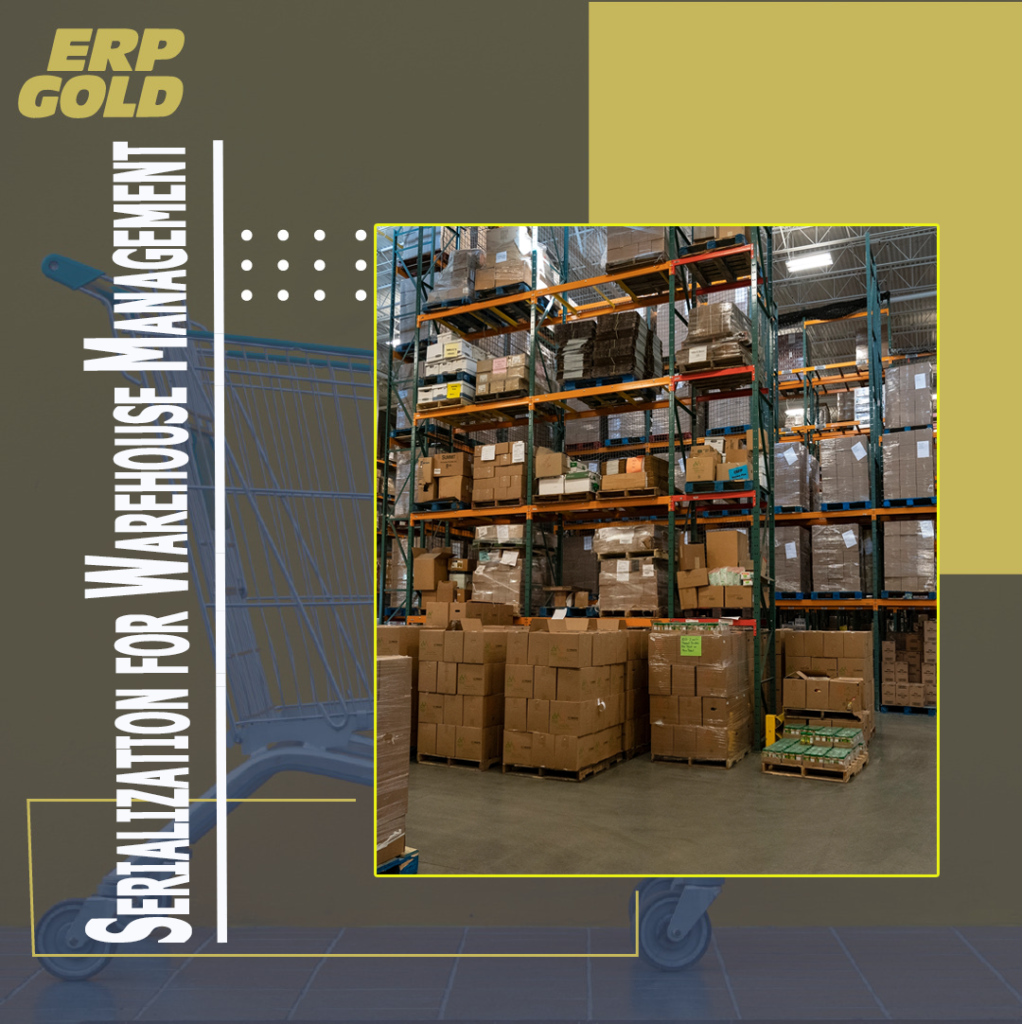
Serialization For Warehouse Management :Steps And Benefits

on April 01, 2022


Warehouse management systems allow companies to keep track of their inventory and improve the efficiency of their supply chain. However, with serialization implementation,  the system has a serial number assigned to each product they store, allowing them to know exactly where the product is located in their warehouse. If there are issues with products being damaged or misplaced, it can easily be tracked down.

What is Serialization for Warehouse management?

Serialization in warehouse management ensures that all products have a unique ID and that no duplicate IDs exist within the system, so that you never have to worry about your stock going missing or getting damaged. Mostly good inventory software companies are providing the given blow measures to take control of your warehouse under the umbrella of serialization.


  • Inventory with two entries

Most of the big software companies are providing unique double-entry inventory management system ensures complete traceability from supplier to customer. Nothing is misplaced; everything is relocated.

  • Using the barcode scanner on your mobile device

We are scanning merchandise in your warehouse. Wherever you are, you can access your dashboards and track orders.

  • Posted transactions have been corrected.

The new lock/unlock button allows you to update any transaction (picking, manufacturing order) after submitting it.

  • User Interface in the Modern Era

A modern inventory management user interfaces with a fast user interface. With or without barcode scanners, get more work done with less effort.

  • Flexible

Activate features to manage a single inventory or a complicated multi-warehouse system.

  • Orders for Delivery (Basic Operations)

With or without barcode scanners, pack orders and deliver. Mostly reputed firms create delivery orders for you based on your preferences and availability.

Below are more steps to make your warehouse management system more effective.

Steps to Make Warehouse House Management System More Effective?

Inventory Revisions

Make an inventory for a zone, a specific product, a lot, or a pallet/box, and Mostly reputed firms will calculate cycle counts for you.

Various Locations

To structure your warehouse, employ hierarchical locations such as zones, rows, and shelves.

Stock In and Out Control

Control arriving products and compare them to what the supplier ordered. You can pack products with a single click and assign barcodes to packs for convenient order tracking.

Drop-shipping using Advanced Routing

Based on products, orders, or customers, deliver directly from your provider to customers.

Cross-Docking

With little to no storage in between, unload incoming goods and move them immediately to outbound gates.

Techniques for storing and removing items

Define your storage and removal methods, such as FIFO, nearest available zone, life, and so on.

Choose, pack, and ship.

Create your order workflow. We can serve customers in one step (delivery order) or multiple steps (picking, packaging, and shipping).

Routes that are both push and pull

To automate orders between warehouses or locations, create your product routes.

Serialization in Multi-Warehouses

Using the same system, you can manage all of your warehouses and establish replenishment policies for each one.

Scanners for Productivity Barcodes

The unified UI is very nice. Barcode scanners should be used for all inventory operations, including inventories, inbound shipments, packing orders, and so forth.

Only use the scanner to scan the products and confirm their receipt or shipment (no keyboard needed). EAN13 and EAN14 are supported.

Customer Service Portal

Your customers can check the status of their orders on the customer portal, including orders, invoices, and delivery order status.

Custom Alerts Define alerts on items or suppliers that should appear when a salesperson is preparing a quote.

Smart Scheduling Software

Based on product availability and order projections, Mostly reputed firms’ schedulers will automatically activate all activities for you.

Serialized vs. Non-Serialized

It would help if you used serialized or non-serialized models for all physical inventory items you want to track in your system or  want Serialization For Warehouse Management.

Each with its unique barcode, individual serial units are used in serialized inventory models, and individually bar-coded units are not included in non-serialized inventory models.

Here is no correct or incorrect method for classifying inventory models as serialized or non-serialized. It’s totally up to you and your company’s operations to decide which items should be serialized and which should be non-serialized. The rules provided here are intended to serve as examples of how each type of item functions in Flex.

Serialization Models For Warehouse Management

Serialized Model Example

A loudspeaker is a nice example of a serialized inventory model. If you establish a serialized inventory model for an EAW loudspeaker in your system, you’ll see a tab labelled “Serial Numbers” on the inventory model page:

Each EAW loudspeaker in your warehouse is assigned a serial number and a unique barcode. When you send any of these loudspeakers out on a job, you’ll scan the unique barcode on each one, allowing you to keep track of where each one is at all times.

Non-Serialized Model Example

An XLR audio signal cable is a nice example of a non-serialized type. You won’t see a “Serial Numbers” tab on the inventory model page if you build a non-serialized inventory model for a 10-foot XLR cable in your Flex system. We will create one barcode, and one will govern every wire in your inventory.

The Qty. tab displays the total number of items in each location. The first figure (On-Hand) represents the current amount in your warehouse, while the second (Allocated) represents the overall amount you own. By pressing the Modify QUANTITIES button at the bottom of the screen, you can change the quantity of a non-serialized model.

Benefits of Serialization For Warehouse Management

Serialized inventory monitoring is beneficial for a variety of reasons. Let’s look at some of the circumstances when this method yields the best results.

  • Warranty and Guarantees

Serialized inventory or serialization For warehouse management  is crucial if you sell products with guarantees and warranties.

Each product is granted a unique serial number that allows you to track when it is sold. Because you’ll know when we purchased the product, warranty repairs and faults will be easier to trace. Because warranties and guarantees are time-sensitive, serialized inventory helps you immediately determine whether the product is still under warranty.

  • Ownership Proof

Serial numbers are an excellent way to establish ownership in the event of theft, loss, or other problems.

VINs are unique identifiers for automobiles. Serial numbers, for example, are used to monitor firearms. The serial numbers simplify identifying a specific item if it is lost or stolen.

Serialization in inventory tracking provides one more layer of security for the owner if there’s a loss or problem.

  • Quality Assurance

When it comes to issues like quality control, serialized inventory monitoring can make things easier.

No matter how careful you are, you will make mistakes. You may end up with a batch of products that all have the same defect. Perhaps a component was defective. Perhaps there was a problem with the machining. Whatever the reason, you’ll need to be able to retrieve those things quickly, so they don’t end up being dispatched to customers.

This is made easy by serial numbers. You can keep track of individual goods, batches, and so forth. It will be easy to identify products that have quality control issues.

  • Recalls of Products

These same serial numbers will make processing a product recall easier if defective items make it out into the world. Rather than initiating a blanket recall, you can concentrate on products that fall into the defective category.

We can see this in action with automobiles.

When a manufacturer issues a recall, having the VINs of impacted vehicles makes it easier to contact owners, schedule repairs, and manage all of the recall’s other crucial components.

  • When Oversight or Compliance with Governmental Requirements are required

To comply with governmental or other regulatory standards, you may be obliged to produce unique serial numbers for tracking products.

This is especially true when it comes to weaponry and medicine. Each firearm must carry a serial number so that if it is used in a crime, stolen, or lost, it may be traced back to its original owner.

Serial numbers are required for medical products in the event of a recall or a problem with the item after it has been acquired.

Serialized inventory numbers make it easier to trace the goods once it leaves your warehouse and is delivered to the owner in each of these circumstances.

  • When Should Serial Numbers Be Used?

You’re probably asking when you should employ serialized inventory tracking at this stage.

Taking things on a case-by-case basis is the best way. Serialization in inventory tracking adds a few extra steps to your inventory management systems, as well as some extra costs. Beyond that, it isn’t required for a wide range of products.

When dealing with high-value products, companies profit from employing serial numbers for tracking in the fullest sense. Unique serial numbers are beneficial to cellphones, laptops and tablets, game consoles, guns, and other items of a similar sort.

Serialized inventory management systems will make your life easier if you sell these products or products that you may need to track for warranty and recall purposes or products subject to governmental or regulatory oversight.

There is no one-size-fits-all list of situations where serial numbers can help your company. The ideal way is to assess each of the products you sell individually, taking into account its value as well as the other factors we’ve discussed and making a decision for each one.

  • Selecting the Most Appropriate Software Package

It’s critical to select the appropriate software for the job. Because there are so many platforms and packages to choose from, researching what they do and what features they offer is a smart place to start. Look at how they handle serial number tracking and, if possible, request a demo. The majority of goods provide video demonstrations of their key features.

If you want to leverage mobile technology, ensure that the platform you choose can handle the task.

  • Greater visibility and more compact groupings

Having all of your goods visible and well organized pays off big time. Groupings are easier to achieve and more effective for forecasting and overall management when serial numbers are tracked. It is possible to achieve everything from connecting comparable goods to the behaviour of specific inventory groupings.

  • Understanding the Personality of Your inventory

You could say that serial numbering aids in identifying your inventory’s personality. As if it was a name badge, with the most crucial information on the bottom. The more information you have about your inventory, the better you’ll be able to plan and make modifications to make the most of it.

  • History that is complete and accurate

Serial numbers make it simple to learn about a part’s or products whole history. This is a huge benefit for any company that uses previous data for forecasting or implementing product recalls. According to leading inventory management software suppliers, this is a simple and user-friendly task.

  • Errors in data entry are reduced.

One of the most effective strategies to reduce data entry and errors is to track serial numbers. Every transfer, sale, or order is more accurate and better regulated now that each product or item is numbered. The combination of mobile and barcode technologies optimizes serial number usage, which is especially beneficial for manufacturing companies or those with a wide variety of inventory.

  • Warehouse management that is efficient and streamlined

In a business’s warehouse, there’s generally a lot going on. Even tiny firms face challenges; thus, new systems always seek to improve operations’ efficiency and effectiveness. Serialization in inventory tracking is one of the most effective ways to eliminate errors and boost efficiency.

  • Processed Goods

Serial number tracking is a critical tool for manufacturing companies. From the beginning to the end of the manufacturing process, it enables accurate tracking, transportation, and order. It permits the implementation of techniques such as Just-In-Time manufacturing, which relies on the ability to move or order production-related products at precisely the correct time.

  • Processes that follow the sale

Another significant benefit is the processes and actions that occur following the transaction. If a part is defective or a product is returned, the relevant information is quickly accessible, accurate, and full.

read more
AdminWhat is Manufacturing accounting software ? Elaboration

How to Start Selling On Ebay| Beginner Guide

on March 31, 2022


eBay is the place to go if you want to sell stuff. If you have products that are no longer needed or wanted, just let eBay know about it and they will put them in the hands of people who can use them. They also have a large selection of marketplaces for electronics, clothing, hardware, and much more.

While eBay started as an auction-based marketplace for secondhand products and collectibles, it has gradually evolved into a fixed-price marketplace. It’s also a terrific location to sell brand-new items.

Indeed, fixed-price or “Buy It Now” ads account for 90% of eBay’s Gross Merchandise Volume (GMV), illustrating its tremendous transition away from its auction market beginnings.

The beauty of eBay is the universe of possibilities available to sellers: you may post products at set or auction pricing, use your own product photographs, add your own descriptions, and sell (almost) anything.

Should you lose your items on eBay?

Anyone may quickly create a seller account and begin selling on eBay, which is most likely why there are around 17 million eBay sellers!It’s very simple to get started as an eBay seller. You may establish an account, list a product, and sell it on the same day.If you have outdated items lying around the house, selling them on eBay may be a simple way to get rid of them while generating some money.

Your amount of success on eBay is entirely up to you; what began as a decluttering project might easily evolve into a constant side hustle or perhaps totally replace your existing income. If you currently sell on Amazon, you should be aware of the following important differences between selling on Amazon and eBay:

  • Instead of fighting for the Buy Box on a single listing for a popular product, each eBay seller may design their own unique listing.
  • eBay provides merchants with more extensive listing optimization than Amazon does.

Step 1: The Fundamentals Of eBay selling

Selling on eBay is straightforward: the seller posts the item, the client purchases it, and the order is completed. We’ll go through what this all implies in general in this stage.

The beauty of selling on eBay is that you can start small. Look around your house for anything that is accumulating dust—everyone has outdated gadgets, books, or toys collecting dust. Product sourcing involves almost little upfront expenditure.

After selling unwanted goods from their homes, eBay entrepreneurs are often bitten by the e-commerce bug and want to launch full-fledged eCommerce enterprises.

Learning the fundamentals of what to sell on eBay early on may help turn a new eBay business into a reliable additional revenue stream or perhaps a major source of income.

Are you still persuaded that you need to launch an eBay business? If not, let’s go through some of eBay’s most frequent business models (i.e., what to sell).

eBay is well-known for being one of the finest locations to find odd stuff. It has since developed, and 79 percent of all things sold on eBay’s 1.5 billion current active listings are brand-new stuff.

Step 2: How to create an eBay Seller Account

  1. Signing up to sell on eBay is a simple procedure. Your company might be up and operating in an hour!
  2. Go to the Create an Account page and fill out the required sections with your name and email address. After that, you’ll establish a password for your account.
  3. After clicking “Create an account,” you’ll be sent to the eBay site to be logged in to your new account. EBay will generate a username for you, but you may alter it under the “My eBay” area by clicking on “Account,” then “Personal Info.”
  4. Add your bank account before creating listings, so you know where the money from your product sales will go.

Include a payment method.

By adding your checking account, you will be able to collect payment from client purchases on your desired payout schedule.

  1. Find the “My eBay” dropdown menu in the top right corner of the eBay main page and select “Selling.”
  2. Then, choose “Account.”
  3. You’ll find “Payment choices” under “Payments.” Fill in the details for the bank account where you want to receive money from eBay sales.
  4. Please keep in mind that eBay sellers were previously compensated using PayPal.
  5. On the other hand, eBay has declared that it will no longer accept PayPal as a payment method by the end of 2020. Instead, eBay adopted its own payment method, Managed Payments, which transfers funds directly to sellers’ bank accounts.
  6. eBay automatically deducts the selling fees from your sales revenues when you use Managed Payments before the distribution.
  7. Step three: Begin selling! It’s that simple—you’re now ready to post your products for sale on eBay.

Step 3: Conduct Product Research

On eBay, you can sell almost anything. You may already have an idea of what to offer or want some inspiration, whether you’re rummaging through your own garage for odds and ends or fantasizing about selling private-label goods. You’ll need to conduct some product research to determine which things are lucrative and at what pricing.

You should not sell just anything on eBay. If you truly want to be successful, you must first assess your product ideas for profitability, demand, and competition before listing them. You’ll be able to assure a return on your investment this way.

We’ll go through lucrative product concepts, how eBay fees affect profitability, how to assess demand and other product research requirements in this stage.

Step 4: Where can I get things to sell on eBay?

With so many various business models to select from, sourcing things for eBay may differ from sourcing products for Amazon.

Alibaba is a great place to find things from China.

Selling your own brand or private label product is a tried and true way to succeed on Amazon, and it also provides an excellent chance on eBay.

The private label strategy has the following advantages:

  • You may build your own brand and product.
  • High-quality pictures and a compelling description may help you stand out from the crowd.
  • You can save money by getting your items from sources outside the United States.

Check out our new How to Sell on Amazon guide for an in-depth explanation on establishing and sourcing a private label product.

Locate things to resale at retail stores.

A traditional eBay business plan is purchasing and reselling things from Walmart, Target, or your local grocery shop. Retail arbitrage may be profitable if you are consistent and know what to search for.

Product research for retail arbitrage is simple—you can do it while you’re out shopping.

  • Look for items in the clearance section, toy aisles, and electronics department—these sell well on eBay and can have significant profit margins depending on demand (more on this below).
  • Scan barcodes using your phone’s eBay app to identify which goods have high sell-through percentages.
  • To analyze the profitability of proposed items, use the Salecalc tool indicated in Step 3. Remember that you may charge clients for shipping to increase your profit margin.

Step 5: Listing and shipping your things

You can post goods on eBay in minutes—even on your phone. This also simplifies submitting product images since you can just choose them from your camera roll.

Using the skateboard as an example, I’ll demonstrate how to list an item using the eBay app.

How to List Your Products on eBay

Click on the first listing in the “Sold Item”-filtered search results.

Select “Sell One Like This.”

This takes you to the Listing Summary page. Essentially, you will have made a copy of the successful listing to utilize for your goods. Although eBay will auto-populate much of the product information, you should still double-check your listing to ensure it is as comprehensive as possible. Because the product has been used, ensure that its condition is appropriately reported.

I recommend that you change the title and description to don’t replicate the other seller word for word. Include any relevant keywords that clients are likely to search for while looking for your goods.

You need to measure and input your own weight and measurements for correct delivery charges.

Do not use another seller’s photographs—replace any copied images with yours. Take your product shots in decent lighting and catch every angle—customers will want to check the item thoroughly.

You will be able to pick between “Auction” and “Buy It Now” prices. “Buy It Now” is typically the best approach to lock in your desired price for most things. Accepting consumer proposals on your goods is an option if you’re ready to go lower.

Final Thought

Now that you understand the fundamentals of sourcing and selling things on eBay.

You are not required to visit all of the product-seeking stores. Do some internet study at home first, so you know what to look for in-store.

You may utilize a website called brickseek.com to find local and online goods offers that you can use with eBay. You can search Brick Seek by zip code, even down to particular shop inventory—just keep in mind that it isn’t always 100 percent accurate.

read more
AdminWhat is Manufacturing accounting software ? Elaboration