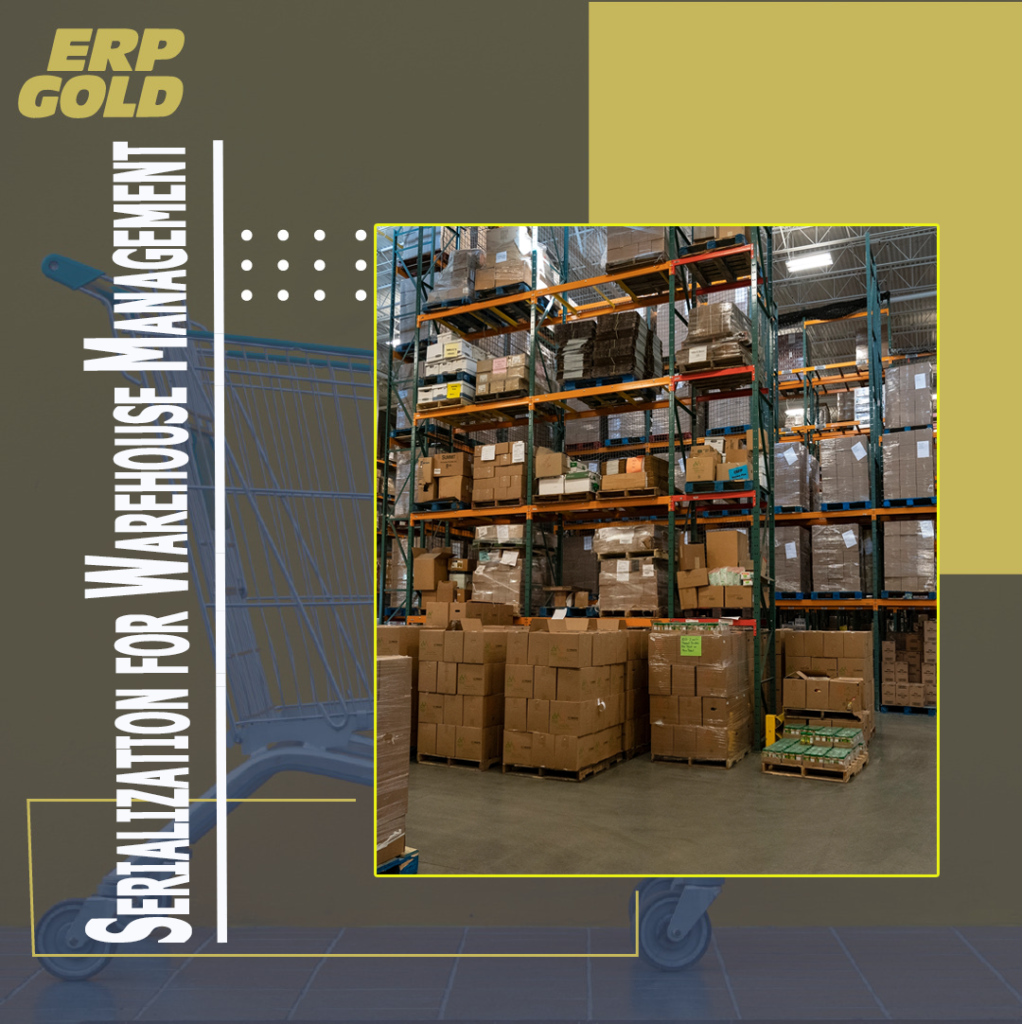
Serialization For Warehouse Management :Steps And Benefits

on April 01, 2022


Warehouse management systems allow companies to keep track of their inventory and improve the efficiency of their supply chain. However, with serialization implementation,  the system has a serial number assigned to each product they store, allowing them to know exactly where the product is located in their warehouse. If there are issues with products being damaged or misplaced, it can easily be tracked down.

What is Serialization for Warehouse management?

Serialization in warehouse management ensures that all products have a unique ID and that no duplicate IDs exist within the system, so that you never have to worry about your stock going missing or getting damaged. Mostly good inventory software companies are providing the given blow measures to take control of your warehouse under the umbrella of serialization.


  • Inventory with two entries

Most of the big software companies are providing unique double-entry inventory management system ensures complete traceability from supplier to customer. Nothing is misplaced; everything is relocated.

  • Using the barcode scanner on your mobile device

We are scanning merchandise in your warehouse. Wherever you are, you can access your dashboards and track orders.

  • Posted transactions have been corrected.

The new lock/unlock button allows you to update any transaction (picking, manufacturing order) after submitting it.

  • User Interface in the Modern Era

A modern inventory management user interfaces with a fast user interface. With or without barcode scanners, get more work done with less effort.

  • Flexible

Activate features to manage a single inventory or a complicated multi-warehouse system.

  • Orders for Delivery (Basic Operations)

With or without barcode scanners, pack orders and deliver. Mostly reputed firms create delivery orders for you based on your preferences and availability.

Below are more steps to make your warehouse management system more effective.

Steps to Make Warehouse House Management System More Effective?

Inventory Revisions

Make an inventory for a zone, a specific product, a lot, or a pallet/box, and Mostly reputed firms will calculate cycle counts for you.

Various Locations

To structure your warehouse, employ hierarchical locations such as zones, rows, and shelves.

Stock In and Out Control

Control arriving products and compare them to what the supplier ordered. You can pack products with a single click and assign barcodes to packs for convenient order tracking.

Drop-shipping using Advanced Routing

Based on products, orders, or customers, deliver directly from your provider to customers.

Cross-Docking

With little to no storage in between, unload incoming goods and move them immediately to outbound gates.

Techniques for storing and removing items

Define your storage and removal methods, such as FIFO, nearest available zone, life, and so on.

Choose, pack, and ship.

Create your order workflow. We can serve customers in one step (delivery order) or multiple steps (picking, packaging, and shipping).

Routes that are both push and pull

To automate orders between warehouses or locations, create your product routes.

Serialization in Multi-Warehouses

Using the same system, you can manage all of your warehouses and establish replenishment policies for each one.

Scanners for Productivity Barcodes

The unified UI is very nice. Barcode scanners should be used for all inventory operations, including inventories, inbound shipments, packing orders, and so forth.

Only use the scanner to scan the products and confirm their receipt or shipment (no keyboard needed). EAN13 and EAN14 are supported.

Customer Service Portal

Your customers can check the status of their orders on the customer portal, including orders, invoices, and delivery order status.

Custom Alerts Define alerts on items or suppliers that should appear when a salesperson is preparing a quote.

Smart Scheduling Software

Based on product availability and order projections, Mostly reputed firms’ schedulers will automatically activate all activities for you.

Serialized vs. Non-Serialized

It would help if you used serialized or non-serialized models for all physical inventory items you want to track in your system or  want Serialization For Warehouse Management.

Each with its unique barcode, individual serial units are used in serialized inventory models, and individually bar-coded units are not included in non-serialized inventory models.

Here is no correct or incorrect method for classifying inventory models as serialized or non-serialized. It’s totally up to you and your company’s operations to decide which items should be serialized and which should be non-serialized. The rules provided here are intended to serve as examples of how each type of item functions in Flex.

Serialization Models For Warehouse Management

Serialized Model Example

A loudspeaker is a nice example of a serialized inventory model. If you establish a serialized inventory model for an EAW loudspeaker in your system, you’ll see a tab labelled “Serial Numbers” on the inventory model page:

Each EAW loudspeaker in your warehouse is assigned a serial number and a unique barcode. When you send any of these loudspeakers out on a job, you’ll scan the unique barcode on each one, allowing you to keep track of where each one is at all times.

Non-Serialized Model Example

An XLR audio signal cable is a nice example of a non-serialized type. You won’t see a “Serial Numbers” tab on the inventory model page if you build a non-serialized inventory model for a 10-foot XLR cable in your Flex system. We will create one barcode, and one will govern every wire in your inventory.

The Qty. tab displays the total number of items in each location. The first figure (On-Hand) represents the current amount in your warehouse, while the second (Allocated) represents the overall amount you own. By pressing the Modify QUANTITIES button at the bottom of the screen, you can change the quantity of a non-serialized model.

Benefits of Serialization For Warehouse Management

Serialized inventory monitoring is beneficial for a variety of reasons. Let’s look at some of the circumstances when this method yields the best results.

  • Warranty and Guarantees

Serialized inventory or serialization For warehouse management  is crucial if you sell products with guarantees and warranties.

Each product is granted a unique serial number that allows you to track when it is sold. Because you’ll know when we purchased the product, warranty repairs and faults will be easier to trace. Because warranties and guarantees are time-sensitive, serialized inventory helps you immediately determine whether the product is still under warranty.

  • Ownership Proof

Serial numbers are an excellent way to establish ownership in the event of theft, loss, or other problems.

VINs are unique identifiers for automobiles. Serial numbers, for example, are used to monitor firearms. The serial numbers simplify identifying a specific item if it is lost or stolen.

Serialization in inventory tracking provides one more layer of security for the owner if there’s a loss or problem.

  • Quality Assurance

When it comes to issues like quality control, serialized inventory monitoring can make things easier.

No matter how careful you are, you will make mistakes. You may end up with a batch of products that all have the same defect. Perhaps a component was defective. Perhaps there was a problem with the machining. Whatever the reason, you’ll need to be able to retrieve those things quickly, so they don’t end up being dispatched to customers.

This is made easy by serial numbers. You can keep track of individual goods, batches, and so forth. It will be easy to identify products that have quality control issues.

  • Recalls of Products

These same serial numbers will make processing a product recall easier if defective items make it out into the world. Rather than initiating a blanket recall, you can concentrate on products that fall into the defective category.

We can see this in action with automobiles.

When a manufacturer issues a recall, having the VINs of impacted vehicles makes it easier to contact owners, schedule repairs, and manage all of the recall’s other crucial components.

  • When Oversight or Compliance with Governmental Requirements are required

To comply with governmental or other regulatory standards, you may be obliged to produce unique serial numbers for tracking products.

This is especially true when it comes to weaponry and medicine. Each firearm must carry a serial number so that if it is used in a crime, stolen, or lost, it may be traced back to its original owner.

Serial numbers are required for medical products in the event of a recall or a problem with the item after it has been acquired.

Serialized inventory numbers make it easier to trace the goods once it leaves your warehouse and is delivered to the owner in each of these circumstances.

  • When Should Serial Numbers Be Used?

You’re probably asking when you should employ serialized inventory tracking at this stage.

Taking things on a case-by-case basis is the best way. Serialization in inventory tracking adds a few extra steps to your inventory management systems, as well as some extra costs. Beyond that, it isn’t required for a wide range of products.

When dealing with high-value products, companies profit from employing serial numbers for tracking in the fullest sense. Unique serial numbers are beneficial to cellphones, laptops and tablets, game consoles, guns, and other items of a similar sort.

Serialized inventory management systems will make your life easier if you sell these products or products that you may need to track for warranty and recall purposes or products subject to governmental or regulatory oversight.

There is no one-size-fits-all list of situations where serial numbers can help your company. The ideal way is to assess each of the products you sell individually, taking into account its value as well as the other factors we’ve discussed and making a decision for each one.

  • Selecting the Most Appropriate Software Package

It’s critical to select the appropriate software for the job. Because there are so many platforms and packages to choose from, researching what they do and what features they offer is a smart place to start. Look at how they handle serial number tracking and, if possible, request a demo. The majority of goods provide video demonstrations of their key features.

If you want to leverage mobile technology, ensure that the platform you choose can handle the task.

  • Greater visibility and more compact groupings

Having all of your goods visible and well organized pays off big time. Groupings are easier to achieve and more effective for forecasting and overall management when serial numbers are tracked. It is possible to achieve everything from connecting comparable goods to the behaviour of specific inventory groupings.

  • Understanding the Personality of Your inventory

You could say that serial numbering aids in identifying your inventory’s personality. As if it was a name badge, with the most crucial information on the bottom. The more information you have about your inventory, the better you’ll be able to plan and make modifications to make the most of it.

  • History that is complete and accurate

Serial numbers make it simple to learn about a part’s or products whole history. This is a huge benefit for any company that uses previous data for forecasting or implementing product recalls. According to leading inventory management software suppliers, this is a simple and user-friendly task.

  • Errors in data entry are reduced.

One of the most effective strategies to reduce data entry and errors is to track serial numbers. Every transfer, sale, or order is more accurate and better regulated now that each product or item is numbered. The combination of mobile and barcode technologies optimizes serial number usage, which is especially beneficial for manufacturing companies or those with a wide variety of inventory.

  • Warehouse management that is efficient and streamlined

In a business’s warehouse, there’s generally a lot going on. Even tiny firms face challenges; thus, new systems always seek to improve operations’ efficiency and effectiveness. Serialization in inventory tracking is one of the most effective ways to eliminate errors and boost efficiency.

  • Processed Goods

Serial number tracking is a critical tool for manufacturing companies. From the beginning to the end of the manufacturing process, it enables accurate tracking, transportation, and order. It permits the implementation of techniques such as Just-In-Time manufacturing, which relies on the ability to move or order production-related products at precisely the correct time.

  • Processes that follow the sale

Another significant benefit is the processes and actions that occur following the transaction. If a part is defective or a product is returned, the relevant information is quickly accessible, accurate, and full.

read more
AdminWhat is Manufacturing accounting software ? Elaboration

How to Start Selling On Ebay| Beginner Guide

on March 31, 2022


eBay is the place to go if you want to sell stuff. If you have products that are no longer needed or wanted, just let eBay know about it and they will put them in the hands of people who can use them. They also have a large selection of marketplaces for electronics, clothing, hardware, and much more.

While eBay started as an auction-based marketplace for secondhand products and collectibles, it has gradually evolved into a fixed-price marketplace. It’s also a terrific location to sell brand-new items.

Indeed, fixed-price or “Buy It Now” ads account for 90% of eBay’s Gross Merchandise Volume (GMV), illustrating its tremendous transition away from its auction market beginnings.

The beauty of eBay is the universe of possibilities available to sellers: you may post products at set or auction pricing, use your own product photographs, add your own descriptions, and sell (almost) anything.

Should you lose your items on eBay?

Anyone may quickly create a seller account and begin selling on eBay, which is most likely why there are around 17 million eBay sellers!It’s very simple to get started as an eBay seller. You may establish an account, list a product, and sell it on the same day.If you have outdated items lying around the house, selling them on eBay may be a simple way to get rid of them while generating some money.

Your amount of success on eBay is entirely up to you; what began as a decluttering project might easily evolve into a constant side hustle or perhaps totally replace your existing income. If you currently sell on Amazon, you should be aware of the following important differences between selling on Amazon and eBay:

  • Instead of fighting for the Buy Box on a single listing for a popular product, each eBay seller may design their own unique listing.
  • eBay provides merchants with more extensive listing optimization than Amazon does.

Step 1: The Fundamentals Of eBay selling

Selling on eBay is straightforward: the seller posts the item, the client purchases it, and the order is completed. We’ll go through what this all implies in general in this stage.

The beauty of selling on eBay is that you can start small. Look around your house for anything that is accumulating dust—everyone has outdated gadgets, books, or toys collecting dust. Product sourcing involves almost little upfront expenditure.

After selling unwanted goods from their homes, eBay entrepreneurs are often bitten by the e-commerce bug and want to launch full-fledged eCommerce enterprises.

Learning the fundamentals of what to sell on eBay early on may help turn a new eBay business into a reliable additional revenue stream or perhaps a major source of income.

Are you still persuaded that you need to launch an eBay business? If not, let’s go through some of eBay’s most frequent business models (i.e., what to sell).

eBay is well-known for being one of the finest locations to find odd stuff. It has since developed, and 79 percent of all things sold on eBay’s 1.5 billion current active listings are brand-new stuff.

Step 2: How to create an eBay Seller Account

  1. Signing up to sell on eBay is a simple procedure. Your company might be up and operating in an hour!
  2. Go to the Create an Account page and fill out the required sections with your name and email address. After that, you’ll establish a password for your account.
  3. After clicking “Create an account,” you’ll be sent to the eBay site to be logged in to your new account. EBay will generate a username for you, but you may alter it under the “My eBay” area by clicking on “Account,” then “Personal Info.”
  4. Add your bank account before creating listings, so you know where the money from your product sales will go.

Include a payment method.

By adding your checking account, you will be able to collect payment from client purchases on your desired payout schedule.

  1. Find the “My eBay” dropdown menu in the top right corner of the eBay main page and select “Selling.”
  2. Then, choose “Account.”
  3. You’ll find “Payment choices” under “Payments.” Fill in the details for the bank account where you want to receive money from eBay sales.
  4. Please keep in mind that eBay sellers were previously compensated using PayPal.
  5. On the other hand, eBay has declared that it will no longer accept PayPal as a payment method by the end of 2020. Instead, eBay adopted its own payment method, Managed Payments, which transfers funds directly to sellers’ bank accounts.
  6. eBay automatically deducts the selling fees from your sales revenues when you use Managed Payments before the distribution.
  7. Step three: Begin selling! It’s that simple—you’re now ready to post your products for sale on eBay.

Step 3: Conduct Product Research

On eBay, you can sell almost anything. You may already have an idea of what to offer or want some inspiration, whether you’re rummaging through your own garage for odds and ends or fantasizing about selling private-label goods. You’ll need to conduct some product research to determine which things are lucrative and at what pricing.

You should not sell just anything on eBay. If you truly want to be successful, you must first assess your product ideas for profitability, demand, and competition before listing them. You’ll be able to assure a return on your investment this way.

We’ll go through lucrative product concepts, how eBay fees affect profitability, how to assess demand and other product research requirements in this stage.

Step 4: Where can I get things to sell on eBay?

With so many various business models to select from, sourcing things for eBay may differ from sourcing products for Amazon.

Alibaba is a great place to find things from China.

Selling your own brand or private label product is a tried and true way to succeed on Amazon, and it also provides an excellent chance on eBay.

The private label strategy has the following advantages:

  • You may build your own brand and product.
  • High-quality pictures and a compelling description may help you stand out from the crowd.
  • You can save money by getting your items from sources outside the United States.

Check out our new How to Sell on Amazon guide for an in-depth explanation on establishing and sourcing a private label product.

Locate things to resale at retail stores.

A traditional eBay business plan is purchasing and reselling things from Walmart, Target, or your local grocery shop. Retail arbitrage may be profitable if you are consistent and know what to search for.

Product research for retail arbitrage is simple—you can do it while you’re out shopping.

  • Look for items in the clearance section, toy aisles, and electronics department—these sell well on eBay and can have significant profit margins depending on demand (more on this below).
  • Scan barcodes using your phone’s eBay app to identify which goods have high sell-through percentages.
  • To analyze the profitability of proposed items, use the Salecalc tool indicated in Step 3. Remember that you may charge clients for shipping to increase your profit margin.

Step 5: Listing and shipping your things

You can post goods on eBay in minutes—even on your phone. This also simplifies submitting product images since you can just choose them from your camera roll.

Using the skateboard as an example, I’ll demonstrate how to list an item using the eBay app.

How to List Your Products on eBay

Click on the first listing in the “Sold Item”-filtered search results.

Select “Sell One Like This.”

This takes you to the Listing Summary page. Essentially, you will have made a copy of the successful listing to utilize for your goods. Although eBay will auto-populate much of the product information, you should still double-check your listing to ensure it is as comprehensive as possible. Because the product has been used, ensure that its condition is appropriately reported.

I recommend that you change the title and description to don’t replicate the other seller word for word. Include any relevant keywords that clients are likely to search for while looking for your goods.

You need to measure and input your own weight and measurements for correct delivery charges.

Do not use another seller’s photographs—replace any copied images with yours. Take your product shots in decent lighting and catch every angle—customers will want to check the item thoroughly.

You will be able to pick between “Auction” and “Buy It Now” prices. “Buy It Now” is typically the best approach to lock in your desired price for most things. Accepting consumer proposals on your goods is an option if you’re ready to go lower.

Final Thought

Now that you understand the fundamentals of sourcing and selling things on eBay.

You are not required to visit all of the product-seeking stores. Do some internet study at home first, so you know what to look for in-store.

You may utilize a website called brickseek.com to find local and online goods offers that you can use with eBay. You can search Brick Seek by zip code, even down to particular shop inventory—just keep in mind that it isn’t always 100 percent accurate.

read more
AdminWhat is Manufacturing accounting software ? Elaboration

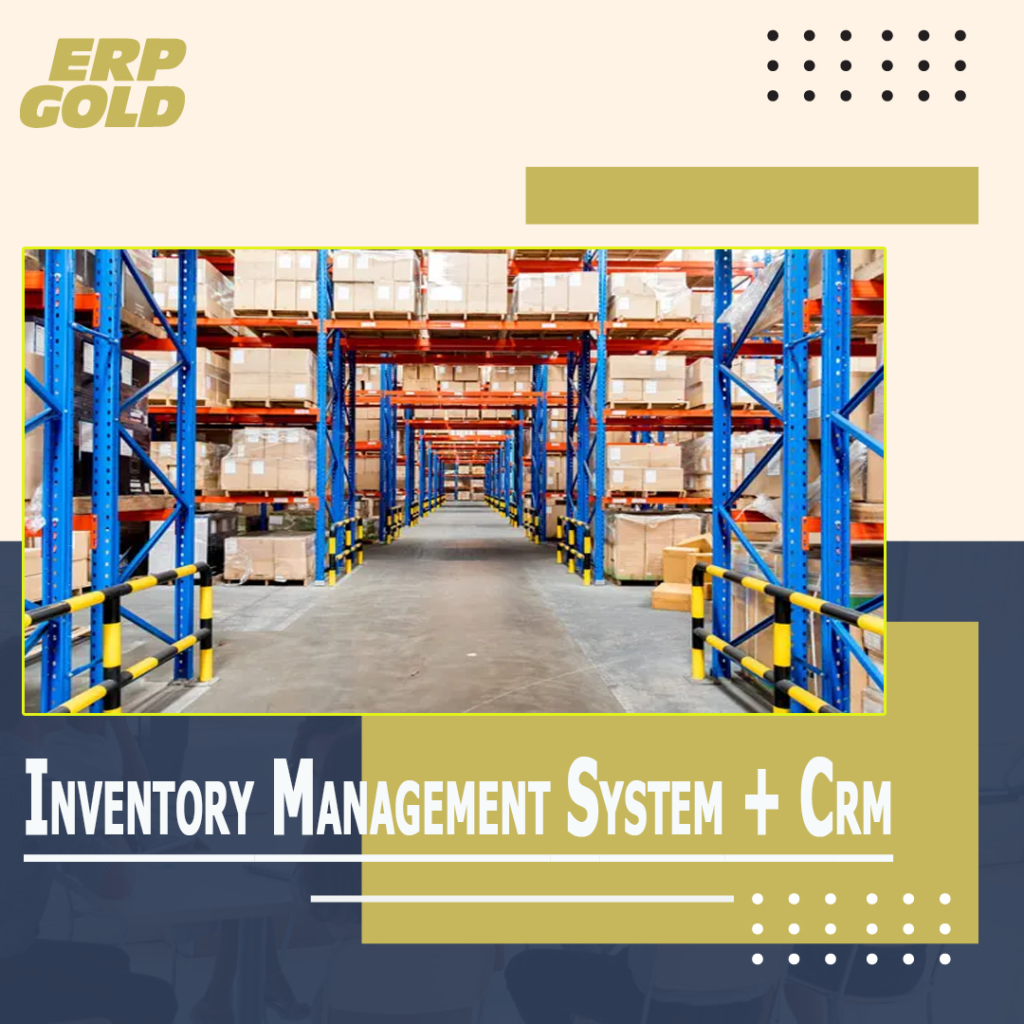
Why Should Inventory Management System Be Integrated With CRM Software?

on March 30, 2022

Is your company using two different systems to keep inventory and client information? Is it getting increasingly difficult for your team to have real-time access to crucial inventory data? Are your billing and status orders being delayed due to inaccurate inventory data? Do you lose essential consumers as a result of poor customer service?

Then it’s time to integrate the inventory management system with the CRM software you already have. Previously, businesses utilized two different methods to manage inventory and CRM software.

Essentially, an inventory management system is limited to managing critical back-end business operations such as billing and shipping details, purchase history, accounting information, financial data, and supply chain management details. In contrast, CRM software is concerned with recording customer details and interactions, tracking sales, managing the sales pipeline, and creating marketing materials.

Organizations with efficient resources can effectively manage the two disparate systems. However, combining an inventory management system with a CRM solution has proven beneficial for businesses in streamlining numerous corporate procedures and increasing bottom-line efficiency.

There are a few more reasons why companies should connect their inventory management system to their CRM solution:

  • Provides a 360-degree view of the customer

Customers are essential for businesses to function, and customers are a company’s most valuable asset. How effectively do you understand your clients’ needs? Do you know your clients’ birthdays and other significant events in their lives?

Integrating your inventory management system with CRM software will give your company a complete 360-degree perspective of your customers. Initial customer contacts, current customer tastes, needs, interests, preferences, buying patterns, purchase history, spending habits, demographics, age, gender, average income, profession, a company of employment, likes and dislikes, order history, billing processes, payment details, status orders, and so on can all be collected using a 360-degree customer view.

“Data is the powerhouse,” as everyone knows. With total visibility into your customers’ journey, your organization will be able to deliver superior customer insights, create long-term customer connections, provide high-quality customer support, and track and monitor changes in consumer tastes, preferences, and expectations, among other things.

  • Have quick and easy access to critical customer data

Thanks to a fully integrated CRM solution with the inventory management system, your staff will have real-time access to vital customer information. For example, suppose a consumer calls your call center with a simple question about the status of an order. In that case, your call center agent does not need to waste time checking other systems or asking other employees.

Your customer service team can effectively use the solutions of an integrated CRM system with inventory management software to have instant access to crucial customer information and information on inventory levels, shipments, order history, customer financials, returns, payments, pricing, and so on.

  • Streamlines a variety of business processes and reduces data entry errors

Firms used to manually handle the various time-consuming business procedures when there wasn’t an integrated solution. Organizations can now increase their productivity by reducing multiple business activities and automating the workflow with the help of an integrated solution.

Furthermore, an integrated solution reduces duplicate material by automatically updating the CRM system with real-time inventory information. As a result, the time-consuming data entry task is accessible, and errors are reduced. Everyone on the team will have direct access to real-time inventory data with updated content. For example, it will reflect any changes made to the inventory database in other systems, such as CRM and vice versa.

Today, any company that thoroughly understands the many stages of a customer’s journey must combine its inventory management system with CRM software.

Furthermore, an integrated solution facilitates cooperation across diverse internal teams, streamlines information, and puts the entire group together on the same page. So, what exactly are you waiting for? Integrate your inventory management system and CRM into a single solution for faster business operations and higher customer satisfaction.

CRM software’s core feature

Artificial intelligence (AI), the Internet of Things (IoT), chatbots, and virtual assistants have dominated the hype cycle around customer relationship management (CRM) software recently. While these are fascinating advances, it is essential to remember that any company wishing to use CRM must first master the deployment of “Core CRM” before adding more complex features and apps.

So, what exactly are “Core CRM” features? Core CRM represents the technical building blocks of your customer engagement approach. Core CRM is the foundation for obtaining and maintaining customer data and main customer activities such as lead conversion, sales cycle management, and issue resolution.

Marketing, sales, and customer service are just a few sectors that use core CRM. However, focusing on customer success, a clever Core CRM strategy breaks down divisions and connects these departments.

In a series of three blog posts, we’ll go over the main components of Core CRM and examine their importance and functions. Our primary focus areas are sales automation, lead management, customer service, and support.

Let’s start with the fundamentals of Sales Automation…

Sales Automation

Sales Automation is a term that refers to technology that is aimed at improving the management of revenue generated by salespeople. (This is in contrast to e-commerce, which allows customers to buy directly from a website or mobile device.)

Because most finished deals are maintained by the sales team and are often more complex and lengthy than, for example, a simple transaction a customer makes at a retail store, sales automation is frequently used by B2B companies or in scenarios with the complex sales cycle.

The following are some of the critical characteristics of the primary pillars of sales automation technology:

Management of Client Accounts

A client, or “account,” is at the heart of most businesses. When a CRM is used to centralize account information, it allows more employees in the firm to have access to critical data and provide context around purchase history and customer preferences when communicating with customers. Accounts, in a nutshell, are the “center” of a customer-centric strategy and a critical component of Core CRM.

CRM Software with ERP Gold Integration

ERP Gold offers the best integration with CRM software. It has all the functionalities to sync data between one another which makes it an integrated system.

“The customer is always right,” as everyone knows. However, there are two significant issues with this piece of advice for many businesses: They have no idea who their customers are, and they may not have a strong sense of what they want or believe. CRM (Customer Relationship Management) solutions allow businesses to stay in touch with customers and keep them engaged increasing income.

These technologies, which began as glorified digital Rolodexes, have evolved to include highly complicated sales forecasting, customer service, and marketing management features.

They also connect to Enterprise Resource Planning (ERP) software, giving everyone in the company a complete picture of the client at any given time. With that in mind, here are seven advantages of adopting CRM, mainly when it’s linked to ERP Gold:

Ending Thought

We’ve worked with several companies on CRM implementations, both on a stand-alone basis and as part of a more extensive ERP system.

CRM software has been around for at least 25 years, and many companies have implemented a basic version to support sales, marketing, and service functions. ERP Gold is providing upscale CRM and ERP features so that the whole business, organization or a company is in your fist. Visit our CRM page to learn more about CRM and see a demo. Thanks

read more
AdminWhat is Manufacturing accounting software ? Elaboration

Serialization For Inventory Tracking And Its Main Reason!

on March 29, 2022


What is serialization?

Serialization in inventory tracking is a method of identifying an article with a mark or code that identifies its unique identification. The serial number is usually a combination of numbers, letters and special characters. When you are ordering the item from the warehouse, the serial number will be used to identify the exact product you want.

One of the most important aspects of running a successful warehouse is inventory management is putting barcodes on the items. You risk losing inventory, customers, and profit as well if you don’t know what’s on hand, what’s sold, and what’s sent.

Inventory management issues might bring your company to its knees. Today, we’ll discuss serialized inventory monitoring and how it can help you to improve your inventory management.

Inventory control is an important point for a company’s success. Serialized inventory management is a sophisticated technique for tracking inventories down to the smallest detail.

This article will define serialized inventory management, explain why it is crucial for inventory management, and demonstrate how to implement it.

Serialization in Inventory Tracking

What is Inventory Serialization, and how does it work?

Serialization of inventory is a procedure that allows you to track individual units of stock using serial numbers. Goods management requires that you keep track of your list.

Regardless of the sort of inventory handled by the company, a strong tracking system is essential. Firms that deal with an extensive list must be extremely cautious with their inventory. For inventory management purposes, the serialized inventory management system assists the company in keeping a rigorous track of each product.

An expensive inventory that requires frequent maintenance and servicing, or covered by a guarantee, must be thoroughly checked and tracked. Serialization in inventory tracking of such products in inventory management aids in the tracking of each item from start to finish.

What are the main reasons why inventory serialization is so important?

Let us now concentrate on the significance of serialized inventory management:

  • Quality Control: Serialization in inventory tracking aids in maintaining quality in manufacturing and assembly processes. We can use individual item serialization related to the batch to trace each batch of the production run. Serialization makes it simple to identify a product and determine the manufacture date or packed date, making it easier for the retailer to handle the quality control process.
  • Traceability: Serialization makes it simple to track down a product and determine which production or assembly batch it belongs to, as well as have all relevant information readily available.
  • Warranties: If your product comes with a warranty, you should invest in inventory management serialization. Serialized objects can be easily traced back to the batch and manufacture date, making warranty and inventory management a breeze.
  • Verify Product Ownership: Serialized objects can be distinguished from counterfeits, and we can track product owners easily.
  • Product Recall: If a product problem is discovered late in the sales cycle, you can identify all goods from that batch and recall and validate them using the serial number linked with the item.

What is the best way to serialize inventory?

  • To serialize inventory, each item is given a unique number that allows it to be distinguished from the rest of your stock. Because this serial number is unique among items, it can determine the product type and batch to which this item belongs.
  • Serialized objects have two identifiers: the SKU, which specifies the item’s type, and a unique serial number, which identifies each particular item in the inventory.

While this can be done manually or with an excel sheet, cloud-based inventory management with inventory serialization is a better option.

What Is The Best Way To Manage Serialized Inventory?

When you receive new goods, make a note of the batch number and, if applicable, the expiration date. The next step is to assign each object a unique serial number. Please make sure the serial number is written on the product to track it. For this, you can use barcode labels or basic sticker labels.

You must keep track of which serial numbers have been removed when shipping out inventory. Keep a record of the serial number of the item sent out to accomplish this.

Take an inventory count regularly by checking serial numbers and comparing the data to the serial number list in your records. This is required to check for leaks and theft.

Ending Thought

The benefits of Serialization in inventory tracking are numerous and obvious. Any business must know exactly where its products are, who has them, and what they do. By tracking serial numbers, a business can make adjustments to inventory management processes and avoid past mistakes.


read more
AdminWhat is Manufacturing accounting software ? Elaboration

20 Must-Have Productivity Tools for Small Businesses

on March 28, 2022


What Are Productivity Tools ?

To identify your needs for tools, you need to know what you’re searching for. Productivity tools are a digital counterpart of office productivity tools — spreadsheets, sticky notes, calendars, memos, etc.

They help enhance workflow, automate operations, and limit the time necessary to perform the activity by maximizing the output.

Among the most popular tools for productivity, you may find time management software, project and task management apps, to-do lists, communication and collaboration tools, and many more.

What Are The Best Productivity Tools for Small Businesses?

There are so many apps to pick from that it’s easy for headaches. And there’s no one-size-fits-all strategy when it comes to choosing the best company productivity tools.

There is, however, a simple recipe that can help you make the right decision. Opt for software that automates and optimizes work, saves money and time, and can be combined with other productivity tools.

Also, note that every firm has various needs and methods of organizing work. Something that works for a small company may not be suitable for a large enterprise.

If you’re not sure which tools to choose, we’ve got your back. Here’s the complete list of the most excellent productivity tools for small businesses and everyone who wants to be more productive!

Time management systems can help to record billable hours, make accurate estimates, and track time against them. They are also beneficial in enhancing productivity, saving time money, and cutting costs on ineffective initiatives.

  • TimeCamp

TimeCamp is a powerful time tracking program that automatically tracks time so you and your team can focus on what truly matters. In Timecamp, you can arrange all your projects with subtasks, personnel, and money to understand how you and your staff work and better manage resources.

It’s a terrific time tracker for agencies that need to track billable time to bill customers accurately, boost productivity, limit scope creep, and ensure deadlines are always met.

You can easily link TimeCamp with other apps for easy workflow and project management.

Here are some of the primary features:

  • Automatic and manual time tracking
  • Offline time tracking
  • Powerful reports with graphs, figures, and efficient outcomes
  • Tracking goals
  • Attendance module with different types of days (remote work, vacations, leaves, and more) (remote work, holidays, leaves, and more)
  • Timesheets with approvals
  • Budgeting
  • GPS tracking
  • Calendar view with colors for visualizing
  • Available on Desktop (Windows, Mac, and Linux), and has native mobile apps available for iOS and Android

Take your business to the next level and sign up for free!

  • Everhour

Everhour is a cloud-based time-tracking program devoted to teams. It combines easy team and project management capabilities to help you keep track of time and organize tasks and processes.

It features eight modules that enable handling all team parts—scheduling with a Gantt chart, module for monitoring time, projects, clients, team information, rich reports, invoicing, and expenses. That allows you to gather all the essential facts regarding work and your organization.

  • DeskTime

DeskTime is a real-time automatic time tracker. The app notes and evaluates your productivity, and it offers rich data graphs with a detailed analysis of how you spent your time at the computer. The offline time tracking function lets you record activities you spend time on when away from the computer but as part of your profession.

The app tracks URLs, apps, and document names. An employee snapshots tool also gives you broad insights into your team’s activity. If you need to track productivity on the go, the mobile app (Android, iOS) (Android, iOS).

Other functions include an absence calendar, invoicing, job scheduling, and interfaces with 3rd party apps like Trello, Gmail, Outlook, and more. You may also use DeskTime as a time clocking tool to check staff attendance.

See the contrast between DeskTime & TimeCamp.

  • Tick

Tick is a lightweight utility for tracking time. It’s simple but contains all the necessary capabilities. It allows you to track billable time hours and control the budget to bill clients appropriately. To obtain fast feedback on your tasks and projects, you may examine the monitored data in reports.

Tick is a cross-platform solution available on iOS, Android, the Apple Watch, desktop PC, or Chrome extension. Additionally, the tool may be coupled with 3rd part programs like Trello, Asana, or Zapier.

  • Focus enhancer

A concentration enhancer is a simple yet powerful tool, and it allows you to log work time with the popular Pomodoro technique. The device is a beautiful choice if you seek a Pomodoro timer to measure time in 25-minutes intervals.

The free edition of the focus booster offers 20 Pomodoro sessions per month, easy time tracking, and productivity reporting. The program offers the fundamental elements necessary to manage and track time—a to-do list, uncomplicated time tracking, tiny and minimalistic timer, light and dark modes, reports with date, client, or label.

You may check your progress in a friendly dashboard that visualizes all data or manually makes entries to your timesheet.

Project and Task Management

Tools for project management allow keeping all relevant things in one place without switching between several programs. Additionally, connectors allow teams to mix several technologies into one to streamline tasks.

  • ClickUp

ClickUp is an all-encompassing tool for project management and team collaboration. It enables you to communicate information with team members in multiple formats. But the application also allows you to organize work and projects the way you choose.

It also replaces long chaotic email threads by providing you with a simple chat environment for group and individual interactions—everything you need to organize projects and exchange information with your team.

Streamline projects, plan every step, and make quick changes. You may also schedule workflow, manage team capacity, and follow all processes. Your team can combine ClickUp with other apps for additional efficiency and configure the tool according to personal preferences. It contains many smaller proprietary features, so it’s easy to tailor every project area.

The program is available on the web, desktop (Windows, Mac, Linux), mobile (Android, iOS), Amazon Alexa enabled, and works with the Google Assistant.

  • Asana

Asana is one of the most popular project management and communication solutions. It helps to arrange projects and tasks so teams can get on the correct track.

With Asana, you can bring your team’s objectives, plans, tasks, files, and more together in one shared location. View your work any way you wish with a listview, timeline, boards, or calendar view. It enables you simply see dependencies, visualize activities, and specify every step of the workflow. Additionally, you can personalize workflow and simplify it with automation rules.

Asana allows you to see each element of the project and the larger picture with real-time updates. Integrations with over 100 apps assist in streamlining procedures.

Asana can help you in many aspects, either to launch a product, monitor projects for your clients or observe organizational objectives and goals.

⇒ Check our connection with Asana and put more automation into your workflow!

  • monday.com

monday.com is a simple to use task management tool. It helps teams construct and shape workflow in minutes to plan, run, and follow their processes, projects, and operations.

The program includes four primary capabilities that are perfectly linked with each other to provide you with a single platform:

  1. Workload with all projects and tasks
  2. Timeline to display all planned events
  3. Dashboard with a main overview of work
  4. Charts to visualize data in the form of graphs

You may quickly and easily arrange tasks using the drag-and-drop feature and integrate monday.com with other apps.

Communication and Collaboration

Good communication and teamwork mean engaged, happy staff. So take care of the inner relationships with these greatest productivity tools for cooperation. They can also help you better communicate with clients and stakeholders.

  • Slack

Slack is a seemingly obvious choice but because of its ability to interact with practically every third-party tool, you may use it to collaborate with your team in any form.

Slack may successfully replace long, chaotic email threads by focussing communication on one platform. The app lets you follow up with everything relating to certain subjects, projects, or teams in their designated channels.

You can simply discover everything in conversation history by utilizing the ‘search’ option. Share your Slack channels with clients, send files, automate normal activities for speedier collaboration. Slack provides the option of voice calls and video conferencing so you may connect with your team the way you prefer to.

  • Podio

Podio is a more professional software for productivity. It’s an online office where you can arrange your business, people, files, and anything else the way you choose. Podio lets you arrange the space within the app to get the most out of it. It offers a customizable interface with a drag-and-drop feature.

App Items — the records created inside your apps – can be displayed using a wide array of layouts. Reports give you an easy method to display sales pipelines, project budgets, time remaining on deliverables, and more.

You can also utilize Podio for task management and communicate directly with peers.

Podio assists in managing not just projects but also linked meetings and activities. It can also support you in the recruitment process of staff for your project. The design is friendly, and what is more significant – it allows you to organize tasks, send messages, and create to-do lists.

  • Automate.io

Automate.io is a no-code solution to integrate your work apps quickly. Sync two or more apps and automate your workflow cycle so that you focus more on vital portions of your business while micromanaging is performed by Automate.io.

For instance, if you want to maintain all the leads from Facebook on a Google Sheet and then place them on a drip, Automate.io allows you accomplish it smoothly.

Automate.io is an excellent automation platform for teams that wish to streamline and simplify procedures. It’s straightforward to use, and therefore it’s acceptable even for the non-tech-savvy people.

  • Pandadoc

PandaDoc is a tool for authoring, approving, tracking, and esigning docs in real-time. It’s a terrific productivity tool that helps streamline the process for essential docs, either for your team or clients.

You may rapidly create a new doc from available templates and see what’s happening with it. The technology also includes the complete team in the design and review process. Create proposals, quotes, contracts, and any other form of document. Integrations with other apps are possible for speedier data collection.

  • Content Snare

Content Snare is a blend of email, chat, and documentation, and it’s a platform for fast organized information acquisition. All it takes is for you to arrange what you need, issue a request, and wait for your clients to send the proper files while Content Snare reminds them automatically what they should do.

You don’t have to request access, trade attachments, and scan email threads for information. Content Snare is your core platform for fast content collecting.

You can utilize templates to save time and repetition. Invite your team members to approve material, create requests and templates, and track due dates. Organize requests under projects and clients for a clear overview.

  • Tallyfy

Tallyfy is an innovative alternative for folks who like to have things their way. It’s a web-based workflow program that instantly gives teams and their clients a beautiful screen to track all of their activities, typical business operations, and work progress.

Tallyfy is a tool that allows you to document and conduct many kinds of repeatable procedures. It enables you to define your team procedures in the mapping process, and it makes intentional business operations explicit activities that are easy to execute and alter.

Tallyfy is one of the greatest productivity tools since it enables you quickly develop, track, share, prioritize, and automate any decision-making process with a wonderfully simple yet powerful rules engine.

  • Feedly

Feedly helps to stay up with the trends and subjects from your sector and areas of interest. It’s an online feed that allows you to organize and read all your trusted periodicals and blogs in one location.

Feedly employs Leo, an AI research assistant, to read your feeds and filter out the noise. Leo can offer you the best articles based on prioritizing specific keywords, trends, subjects, articles similar to your boards, and software vulnerabilities. The longer you use Feedly, the better Leo looks for the most relevant articles.

You may also use the app with your team to collaboratively research and share critical industry trends.

  • Bear

Bear is a writing app for notes and prose on Apple devices. You may use it to compose everything from one-sentence notes to-do lists, and large essays.

The focus mode helps to concentrate, and the app includes themes, typography, and dark mode to modify the interface. There are hashtags, recognition of such elements as links, emails, addresses, colors, different export options, and more.

And Bear Pro enables you to encrypt notes or lock the app with the password or Face/Touch ID. Bear is a lightweight but powerful solution.

Check also the best note-taking apps for Android.

  • Pocket

How often have you come across an article, news, or story that has inspired you and wanted to save, and come back to later? You can save all your favorite articles to Pocket and preserve them for subsequent reference.

It functions like a digital pocket or portfolio where you may keep all the material you uncover on the Internet.

Pocket Premium unlocks a permanent library for the articles and websites you save; provides you full-text, subject, tag, and author search to help you find exactly what you’re searching for; and delivers suggested tags that take the work out of organizing your list.

  •  Grammarly

Grammarly is AI-powered online writing help. It helps to eliminate spelling and grammar issues as you write. It’s a terrific free productivity program since it helps to save energy and time on discovering faults, especially ones you wouldn’t be able to spot. And all your stuff is preserved in the app so you can always access it.

If you’d like more features like style, tone, and clarity improvements for writing, fluency checks, plagiarism detection, tone modifications, and more, the price starts from $11.66 per month.

You may also try the Hemingway App – an alternative for Grammarly for more sophisticated writers.

  •  ProWritingAid

There is more to excellent writing than merely flawless grammar. Grammatically perfect sentences can still be confusing and awkward. Clear language, specific word choice and well-constructed sentences are essential to getting your idea across clearly.

You and your workers are full of writing potential. Even the least confident writers can write interesting, professional documents with the correct tools. ProWritingAid helps your staff spot potentially embarrassing typos and invest in their writing skills. Its proposed enhancements, explanations, and videos help authors comprehend the “why” behind the changes they make.

And with its configurable style guide and text expander features, ProWritingAid guarantees that your brand identity remains consistent in every email, newsletter, note and press release.

Improve the strength, consistency, and accuracy and start making genuine connections with your clientele.

Planning and organization are crucial in being productive, and they might aid you in building time management abilities. You can also structure workflow for your team.

  • Calendly
  • Calendly is one of the most popular productivity tools for planning. It offers everything you need to plan a meeting, video or phone chat, and any other event.
  • Calendly allows your website visitors to plan a meeting or book a demo to chat with your salesperson. We use it at TimeCamp successfully, and it helps us and our clients connect swiftly
  • Calendly works with your calendar to automatically check availability. You can set numerous types of meetings – one-on-one, teams, groups, etc. for different types of events. It features notifications, customization, and time zone identification. Its website embeds for scheduling directly from your website. Calendly also connects with other apps.
read more
AdminWhat is Manufacturing accounting software ? Elaboration